Carol Sakey
Uncategorized

NZ DEFENCE FORCE ‘AUTHORIZATION- SHOOT TO KILL CHRISTIANS WITH TRADITIONAL VALUES FOR VIDE0

NZ Defence Force’s Authorized Authority ‘Shoot on Sight’ – Shoot To Kill Christians with Traditional Values’. This is not Fake News – It’s a Truth Bomb that could explode in the governments face.  This very concerning information originated from a group of  Ex NZ Defence Force Personnel whom were mandated under duress during COVID19.

They established a group called ‘United We Stand NZ’. They  produced a short video into the public arena and documented evidence of a late 2025 NZDF Burham Simulated Training Program that’s entirely different from any previous NZDF Training Programs. The video revealed scenarios where the fictional opposing force  (The Adversary Enemy) are  described as a Christian Community with Traditional Values

The Christian Community were given a fictious name (DSM).  The  fictional Pacific country where they lived was called Belisia. Scenarios  document troops managed periods of Civil Unrest in Belisia.. The Christians with Traditional Values were given the fictitious name (VPF) Visayan Peoples Front. The country they lived in closely resembled the South Island of NZ.

Scenarios include NZDF authorized to use ‘Lethal Force’ – ‘Shoot to Kill On Sight’  *The Christian Community with Traditional Values- whom are described as Violent Extremists. The community of Christians with Traditional Values  opposed in Islamization (Defended their Faith).  . For the NZDF this being a ‘High-Readiness Inter-operability Training Exercise. These Training Exercises were used for Junior Non-Commissioned Officer Courses (JNCO) within the (3rd Combat Service Support Battalion – 3RCW.

Penny-Marie & Michelle Scott (Independent Investigate Media Reporters produced a video , that’s out in the public arena. Due to their concerns as to the Burham Military Camp Video . They describe the Simulated NZDF Scenarios “Like a Cut & Paste Culture War”. Their You Tube Video is titled ‘Why Are NZ Army Training To Kill Christians’? In their video is included the short United We Stand NZ Video con Christians with Traditional Values as ‘The Enemy On The  Map’.

Penny-Marie & Michelle Scott have now sent a letter of concern to the Leaders of the Three Party Coalition & their MPs. Which includes a number of questions that require a response. Also an OIA (Official Information Request) by S E Shaw has been sent to the NZDF. This also has a number of concerning questions waiting to be responded to. With similar serious concerns as to ‘Painting/Framing  Christians with Traditional Values as Extreme Violent Adversary Enemy’.

Questions includes:- When, How and Whom developed –(Approved) this Training Program where Christians with Traditional Values are the Enemy. And why is this Training Program entirely different from previous Training Programs? And how widely does the NZDF use this Training Program. In 2023 the US produced an Army Training Program called DATE ‘P’. Simulated scenarios are Countries/Regions with fictious names. NZDF started using this in 2023 shortly after it was produced by the US

RNZ Article in June 2025 confirmed that  NZDF at Burnham Military Camp were using the US DATE Army Standard Training Program. Therefore this entire difference in who the Adversary enemy being  a Christian Community described as Violent Extremists ‘Shoot to Kill On Sight’ is a relevantly new Training Program. In the Penny-Marie & Michelle Scott video they include some very interesting points.

Such as- what other groups would treat Christians with Traditional Beliefs as their Enemy in NZ. And what do they have in common with NZ Defence Force?…                              The NZDF are LGBTQ1 + Inclusive. Have Pride Accreditation.& The Rainbow Tick (This being an Ideological Conflict with Christians that hold Traditional Values) Seen as the Adversary Enemy. (A Threat Group)

What other entities would see Christians with Traditional Values as an Adversary Enemy (A Threat Group)? Central & Local Government * Govt Agencies *NGO’s * Academia (Uni Students-Lecturers etc.,) Also are included in having an Ideological Conflict with Christians that have Traditional Values.  For example -Mark Mitchell (Police Minister) strongly opposes Destiny Church Protests *Auckland Council & NZTA made Destiny Church an Adversary Enemy when members of Destiny Church  scrubbed out the Rainbow Crossing in K Road. Auckland. (This is being an  Ideological Conflicting scenario)

The  Te Atatu Library LGBTQ1+ Children’s Storytime again Destiny Church Rally /Protest. (Christians again being the Adversary Enemy)  (Ideological Conflict with Christian)  Destiny Church Protests against Pro Palestinians (Ideological Conflict -Christians the Enemy). Yet Black Lives Matter- The huge Hikoi march (Were not seen as the Adversary Enemy by Police-NZTA)

COVID 19 Mandate Protests by Destiny Church. Brian Tamaki arrested put in Mt Eden Jail for breaking Restrictions. (America’s Cup 2021 (Prada Cup) permitted to sail under Level 3 Lockdown in Auckland (16th February 2021 NZ Herald)  Huge crowds sat closely together as they watched this in Auckland (No Arrests).

 1,000s of Protesters marched in Auckland * Wellington * Christchurch * Dunedin in Solidarity for Black Lives Matter ‘The Killing of George Floyd’ during COVID19 Lockdown 2. Majority did not wear masks. Ignored Physical Distancing. ..Police stayed back away from the protests opting for a tolerant approach. Black Lives Matter intersectionality emphasize that Black Liberation must Include Black Queer * Trans * And Gender-Non-conforming people (Ideological Conflict with the Christians that hold Traditional Values)- (Spin Off & RNZ Reported Articles)Police took a tolerant approach and stood back) Police did not take a tolerant approach with Destiny-Brain Tamaki

The New Conservative Party majority Christians included Elliot Ikilei Deputy Leaders of New Conservative gave a Freedom Speech in Aotea Sq Auckland as did Jesse Anderson whom began his speech announcing he is a Christian – as is Elliot Ikilei. There was a big Police presence. I also gave a speech that day as I had  submitted a petition objecting to the UN Global Compact Of Migration to Parliament. (I too am a Christian). Jesse Anderson was a wonderful father of a little boy whom he had in his care.

The child was removed from his care. He was targeted by Police. He broke his heart when his little boy was taken out of his care, sadly this led him to take his own life. I am Christian I was also targeted by the Police. A visit from 2 police officers warning me not to speak out or organize any protests. At one stage a line of police officers in Aotea Square shouted at me to Go Home….as I had CCTV Camera’s in my face ( Yes- Christians were the Adversary Enemy)

The Burnham Military Camp Training Program.  The Christian Community with Traditional Values. ‘The authorized use of Lethal Weapons- The Shoot To Kill On Sight’ ‘. Is described as a 5th Generation Warfare Narrative. * Language in Training Materials being used to dehumanize (Destabilize) . Push Populations towards Crisis so that  a predetermined solution can be imposed.

A Spiritual * Psychological * Ideological Warfare against Christian People with Traditional Values. Its questionable as to the potential risks- impacts on these soldiers that partake in these Training Exercises and Society itself?.. Should we be concerned? Yes I personally believe we should be highly concerned. What are the potential Risks? Afterall, in NZ many Christians still gather in prayer at Easter (Jesus crucifixion). And at Christmas celebrating the Birth Of Jesus. Many Christians still attend Church on Sundays

The ANZAC Troops WW1 often carried the bible on the battleground and at the Enemy Front Lines. There are still Prayer gathering for the ANZACs – all those soldiers that courageously fought for us &  died for us – for our Freedom & Our Liberty. Described as Christian Heroism. ANAC Commemorations (Biblical verses). The Remebrance Day Words that echo throughout NZ & Australia

The writing imprinted into Remembrance Stones from the book of Sirach ( Chapter 44) “Let us now praise those famous men and our fathers in their generation” We Shall Never Forget Them”.- (May they liveth for ever-more ) Yet, the NZDF in their Burnham Military Training Exercise Program choose the ‘Adversary enemy to be Christians with Traditional Values). Why not Islamist Terrorists whom have murdered – tortured- kidnapped – unjustly imprisoned Christians ?

The Painting/Framing Christian with Traditional Values as Violent Extremists (Shoot To Kill- Use Lethal Force). NZ Designated Terrorist List -Zilch Christian affiliated Terrorists)  After researching have questions myself which include:-

After Researching the Psychology of Combat Training (Simulation Training Exercises & Religion)  Included the  potential risks of psychologically influencing  soldiers mindsets. The impact on Society. Trust issues as to whom and whom not to trust. Biases towards Christians (where Christian are the opposing enemy) And the potential risks/harms caused by ‘Moral Injury’ and ‘Cognitive Dissonance’

Particularly when Soldiers belong to a Christian Faith Group. This conflicting with their Moral/ethical/religious conviction. Being a form of Psychological Harm. With Simulation Training Exercises often using Dehumanizing Tactics. Making the Enemy nameless (Fictitious Names) or employing specific stereotypes to create a sense of ‘Otherness– You Vs Them scenario.

Psycholical harm may occur when an individual violates their own deeply held moral beliefs (Called -Definition Crisis). Where a Christian Soldier fights the Adversary enemy who is also a Christian (The Enemy)  Causing the soldier to question the justification of the conflict. Thus causing a potential for increased distress. Studies indicate whilst Religious (Christian Beliefs) can provide Resilience.

This can also cause a conflict thus contradicting those beliefs (Eg Such as fighting a fellow believer of the Christian Faith). Which may cause a negative ability to cope which can lead to PTSD Symptoms (Post Traumatic Disorder) Thus disrupting Cognitive-Moral -Spiritual mindset, potentially causing ‘emotional-Mental-Ethical Distress thus  ‘Ineffective Training’ Often manifesting in Cognitive Dissonance/ Moral Injury

May also conflict with Morals * Beliefs (Self Identity- The Lost and the Found)The Human Spirit is a motivating force directed towards realizing Higher Orders ‘Goals’- ‘Aspirations; that grow out of the ‘Essential Self’. Perceptions of Reality can be shattered and the Spirit broken when struggling with Moral Injury/ Cognitive Dissonance. This may also impact on Psychological Wellbeing/Health causing distress & increased Mental Health Symptoms & a Great Risk of Mortality

The Disconnection from others thus impacting on Society – Public Distrust. The use of Army Training Programs where Christians with Traditional Values described as Violent Extremists ‘Use authorized Lethal Force against them’ – Shoor to Kill On Sight’. Framing /Painting Christian Faith Identity as the Enemy influences cultural narratives & potentially causes Societal Conflict-Disunity – Fragmentation- -Disharmony -Distrust -therefore has a very real potential to negatively impact on Society

Burnham Miliary Camp NZ Defence Force Training Program -…Yes- ‘A Cut * Paste  Culture Ideological Psychological Warfare’ – Using authorized Lethal Force against Christians with Traditional Beliefs ‘Calling them Violent Extremists’ and ‘Shoot To Kill On Sight’. We must demand answers as to Who developed  and Approved this NZDF Training Program at Burnham Military Camp & The reasons behind it. (The Ideological Conflict with Christians & their Traditional Values)

Penny – Marie & Michelle Scotts video has 14,000 plus followers. The Silence is deafening. .WHY? It should be most concerning

WakeUpNZ  RESEARCHER.. Cassie

LINKS:

https://www.nzherald.co.nz/sport/sailing/americas-cup/americas-cup-2021-prada-cup-final-schedule-uncertain-but-teams-permitted-to-sail-under-level-three-covid-19-lockdown-in-auckland/X5INY373CQEL4S722ZS6Y3BZ44/

(https://pmc.ncbi.nlm.nih,gov/articles/PMC6501118/

(https://www.opendoors.org/en-US/persecution/countries/#:~:text=More%20than%20388m%20Christians%20suffer,and%20discrimination%20for%20their%20faith.&text=1%20in%207,Christians%20are%20persecuted%20worldwide&text=1%20in%205,Christians%20are%20persecuted%20in%20Africa)       https://youtu.be/9Rfx-FuREE8?si=bgaWO9n5-Njx4kng

(S E Shaw- OIA REQUEST     https://fyi.org.nz/request/33328-framing-of-traditional-christians-as-enemy-in-nz-army-training?unfold=1#:~:text=From:%20S.E.%20Shaw,generally%20used%20by%20NZ%20Army?)

(https://youtu.be/9Rfx-FuREE8?si=vri-qxQ78S7n7KJc)                                                                                                                                                                                                                                   (https://www.rnz.co.nz/news/national/563405/new-zealand-defence-force-using-us-army-wargame-simulation-software-date)   (https://www.nzdf.mil.nz/assets/Uploads/DocumentLibrary/ArmyNews_Issue552.pdf)

(https://mail.google.com/mail/u/0/?tab=rm&ogbl#inbox/FFNDWNXgSWSxDXQcScLjzTSgCRhrrVbh?projector=1&messagePartId=0.1)

https://fyi.org.nz/request/33538-auckland-harbour-bridge-safety-risk-assessments-protest-approvals-and-event-permitting#incoming-137494

https://www.greaterauckland.org.nz/2022/12/20/waka-kotahis-harbour-bridge-walk-and-wheel-events/ Supported

https://www.nzherald.co.nz/nz/auckland/a…

https://www.nzherald.co.nz/nz/auckland/police-to-monitor-auckland-fishing-protest-convoy-over-harbour-bridge-along-waterfront/4DIC3MIID5AEBB2GQEXEDCFOMY/

https://www.youtube.com/watch?v=zFlF0agWaeM

https://www.teaonews.co.nz/2022/02/26/anti-mandate-protestors-cross-auckland-harbour-bridge/


...

Other Blog Posts

DECLARATION OF HELSINKI (The World Medical Association)

These are the primary principles of the Helsinki Declaration:-
The basic principles include respect for individuals, the right to make informed decisions, recognition of vulnerable groups, and more. The Declaration of Helsinki has been revised six times, in 1975, 1983, 1989, 1996, 2000, and 2008.

The four basic principles of research are classified as autonomy, beneficence, non-maleficence, and justice.

THE PREAMBLE: The World Medical Association (WMA) has developed the Declaration of Helsinki as a statement of ethical principles for medical research involving human subjects, including research on identifiable human material and data.

The Declaration of Helsinki is consistent with the mandate of the WMA, the Declaration is addressed primarily to physicians. The WMA encourages others who are involved in medical research involving human subjects to adopt these principles.

GENERAL PRINCIPLES: -The Declaration of Geneva of the WMA binds the physician with the words, “The health of my patient will be my first consideration,” and the International Code of Medical Ethics declares that, “A physician shall act in the patient’s best interest when providing medical care.”
It is the duty of the physician to promote and safeguard the health, well-being and rights of patients, including those who are involved in medical research. The physician’s knowledge and conscience are dedicated to the fulfilment of this duty.

Medical progress is based on research that ultimately must include studies involving human subjects.
The primary purpose of medical research involving human subjects is to understand the causes, development and effects of diseases and improve preventive, diagnostic and therapeutic interventions (methods, procedures and treatments). Even the best proven interventions must be evaluated continually through research for their safety, effectiveness, efficiency, accessibility and quality.

Medical research is subject to ethical standards that promote and ensure respect for all human subjects and protect their health and rights. While the primary purpose of medical research is to generate new knowledge, this goal can never take precedence over the rights and interests of individual research subjects.
It is the duty of physicians who are involved in medical research to protect the life, health, dignity, integrity, right to self-determination, privacy, and confidentiality of personal information of research subjects. The responsibility for the protection of research subjects must always rest with the physician or other health care professionals and never with the research subjects, even though they have given consent.

Physicians must consider the ethical, legal and regulatory norms and standards for research involving human subjects in their own countries as well as applicable international norms and standards. No national or international ethical, legal or regulatory requirement should reduce or eliminate any of the protections for research subjects set forth in this Declaration.
Medical research should be conducted in a manner that minimises possible harm to the environment.

Medical research involving human subjects must be conducted only by individuals with the appropriate ethics and scientific education, training and qualifications. Research on patients or healthy volunteers requires the supervision of a competent and appropriately qualified physician or other health care professional.
Groups that are underrepresented in medical research should be provided appropriate access to participation in research.

Physicians who combine medical research with medical care should involve their patients in research only to the extent that this is justified by its potential preventive, diagnostic or therapeutic value and if the physician has good reason to believe that participation in the research study will not adversely affect the health of the patients who serve as research subjects
Appropriate compensation and treatment for subjects who are harmed as a result of participating in research must be ensured.

RISKS, BENEFITS AND BURDENS:- In medical practice and in medical research, most interventions involve risks and burdens. Medical research involving human subjects may only be conducted if the importance of the objective outweighs the risks and burdens to the research subjects.
All medical research involving human subjects must be preceded by careful assessment of predictable risks and burdens to the individuals and groups involved in the research in comparison with foreseeable benefits to them and to other individuals or groups affected by the condition under investigation.

Measures to minimise the risks must be implemented. The risks must be continuously monitored, assessed and documented by the researcher.
Physicians may not be involved in a research study involving human subjects unless they are confident that the risks have been adequately assessed and can be satisfactorily managed.
When the risks are found to outweigh the potential benefits or when there is conclusive proof of definitive outcomes, physicians must assess whether to continue, modify or immediately stop the study.

VUNERABLE GROUPS AND INDIVIDUALS:- Some groups and individuals are particularly vulnerable and may have an increased likelihood of being wronged or of incurring additional harm. All vulnerable groups and individuals should receive specifically considered protection.
Medical research with a vulnerable group is only justified if the research is responsive to the health needs or priorities of this group and the research cannot be carried out in a non-vulnerable group. In addition, this group should stand to benefit from the knowledge, practices or interventions that result from the research.

SCIENTIFIC REQUIREMENTS AND RESEARCH PROTOCOLS: – Medical research involving human subjects must conform to generally accepted scientific principles, be based on a thorough knowledge of the scientific literature, other relevant sources of information, and adequate laboratory and, as appropriate, animal experimentation. The welfare of animals used for research must be respected.
The design and performance of each research study involving human subjects must be clearly described and justified in a research protocol.
The protocol should contain a statement of the ethical considerations involved and should indicate how the principles in this Declaration have been addressed. The protocol should include information regarding funding, sponsors, institutional affiliations, potential conflicts of interest, incentives for subjects and information regarding provisions for treating and/or compensating subjects who are harmed as a consequence of participation in the research study.

In clinical trials, the protocol must also describe appropriate arrangements for post-trial provisions.
RESEARCH ETHIC COMMITTEE’S:- The research protocol must be submitted for consideration, comment, guidance and approval to the concerned research ethics committee before the study begins. This committee must be transparent in its functioning, must be independent of the researcher, the sponsor and any other undue influence and must be duly qualified. It must take into consideration the laws and regulations of the country or countries in which the research is to be performed as well as applicable international norms and standards but these must not be allowed to reduce or eliminate any of the protections for research subjects set forth in this Declaration.

The committee must have the right to monitor ongoing studies. The researcher must provide monitoring information to the committee, especially information about any serious adverse events. No amendment to the protocol may be made without consideration and approval by the committee. After the end of the study, the researchers must submit a final report to the committee containing a summary of the study’s findings and conclusions.

PRIVACY AND CONFIDENTIALITY:- Every precaution must be taken to protect the privacy of research subjects and the confidentiality of their personal information.
INFORMED CONSENT: Participation by individuals capable of giving informed consent as subjects in medical research must be voluntary. Although it may be appropriate to consult family members or community leaders, no individual capable of giving informed consent may be enrolled in a research study unless he or she freely agrees.

In medical research involving human subjects capable of giving informed consent, each potential subject must be adequately informed of the aims, methods, sources of funding, any possible conflicts of interest, institutional affiliations of the researcher, the anticipated benefits and potential risks of the study and the discomfort it may entail, post-study provisions and any other relevant aspects of the study. The potential subject must be informed of the right to refuse to participate in the study or to withdraw consent to participate at any time without reprisal. Special attention should be given to the specific information needs of individual potential subjects as well as to the methods used to deliver the information.

After ensuring that the potential subject has understood the information, the physician or another appropriately qualified individual must then seek the potential subject’s freely-given informed consent, preferably in writing. If the consent cannot be expressed in writing, the non-written consent must be formally documented and witnessed.

All medical research subjects should be given the option of being informed about the general outcome and results of the study.

When seeking informed consent for participation in a research study the physician must be particularly cautious if the potential subject is in a dependent relationship with the physician or may consent under duress. In such situations the informed consent must be sought by an appropriately qualified individual who is completely independent of this relationship.
For a potential research subject who is incapable of giving informed consent, the physician must seek informed consent from the legally authorised representative. These individuals must not be included in a research study that has no likelihood of benefit for them unless it is intended to promote the health of the group represented by the potential subject, the research cannot instead be performed with persons capable of providing informed consent, and the research entails only minimal risk and minimal burden.

When a potential research subject who is deemed incapable of giving informed consent is able to give assent to decisions about participation in research, the physician must seek that assent in addition to the consent of the legally authorised representative. The potential subject’s dissent should be respected.

Research involving subjects who are physically or mentally incapable of giving consent, for example, unconscious patients, may be done only if the physical or mental condition that prevents giving informed consent is a necessary characteristic of the research group. In such circumstances the physician must seek informed consent from the legally authorised representative. If no such representative is available and if the research cannot be delayed, the study may proceed without informed consent provided that the specific reasons for involving subjects with a condition that renders them unable to give informed consent have been stated in the research protocol and the study has been approved by a research ethics committee. Consent to remain in the research must be obtained as soon as possible from the subject or a legally authorised representative.

The physician must fully inform the patient which aspects of their care are related to the research. The refusal of a patient to participate in a study or the patient’s decision to withdraw from the study must never adversely affect the patient-physician relationship.

For medical research using identifiable human material or data, such as research on material or data contained in biobanks or similar repositories, physicians must seek informed consent for its collection, storage and/or reuse. There may be exceptional situations where consent would be impossible or impracticable to obtain for such research. In such situations the research may be done only after consideration and approval of a research ethics committee.

USE OF PLACEBO:- The benefits, risks, burdens and effectiveness of a new intervention must be tested against those of the best proven intervention(s), except in the following circumstances:
Where no proven intervention exists, the use of placebo, or no intervention, is acceptable; or
Where for compelling and scientifically sound methodological reasons the use of any intervention less effective than the best proven one, the use of placebo, or no intervention is necessary to determine the efficacy or safety of an intervention and the patients who receive any intervention less effective than the best proven one, placebo, or no intervention will not be subject to additional risks of serious or irreversible harm as a result of not receiving the best proven intervention. Extreme care must be taken to avoid abuse of this option

POST TRIAL PROVISIONS:- In advance of a clinical trial, sponsors, researchers and host country governments should make provisions for post-trial access for all participants who still need an intervention identified as beneficial in the trial. This information must also be disclosed to participants during the informed consent process.

RESEARCH REGISTRATION AND PUBLICATION AND DISSEMINATION OF RESULTS:- Every research study involving human subjects must be registered in a publicly accessible database before recruitment of the first subject.
Researchers, authors, sponsors, editors and publishers all have ethical obligations with regard to the publication and dissemination of the results of research. Researchers have a duty to make publicly available the results of their research on human subjects and are accountable for the completeness and accuracy of their reports. All parties should adhere to accepted guidelines for ethical reporting. Negative and inconclusive as well as positive results must be published or otherwise made publicly available. Sources of funding, institutional affiliations and conflicts of interest must be declared in the publication. Reports of research not in accordance with the principles of this Declaration should not be accepted for publication.

UNPROVEN INTERVENTIONS IN CLINICAL PRACTICE:- In the treatment of an individual patient, where proven interventions do not exist or other known interventions have been ineffective, the physician, after seeking expert advice, with informed consent from the patient or a legally authorised representative, may use an unproven intervention if in the physician’s judgement it offers hope of saving life, re-establishing health or alleviating suffering. This intervention should subsequently be made the object of research, designed to evaluate its safety and efficacy. In all cases, new information must be recorded and, where appropriate, made publicly available.

PRIVACY & CONFIDENTILITY: Every precaution must be taken to protect the privacy of research subjects and the confidentiality of their personal information.
INFORMED CONSENT: Participation by individuals capable of giving informed consent as subjects in medical research must be voluntary. Although it may be appropriate to consult family members or community leaders, no individual capable of giving informed consent may be enrolled in a research study unless he or she freely agrees.

In medical research involving human subjects capable of giving informed consent, each potential subject must be adequately informed of the aims, methods, sources of funding, any possible conflicts of interest, institutional affiliations of the researcher, the anticipated benefits and potential risks of the study and the discomfort it may entail, post-study provisions and any other relevant aspects of the study. The potential subject must be informed of the right to refuse to participate in the study or to withdraw consent to participate at any time without reprisal. Special attention should be given to the specific information needs of individual potential subjects as well as to the methods used to deliver the information.
After ensuring that the potential subject has understood the information, the physician or another appropriately qualified individual must then seek the potential subject’s freely-given informed consent, preferably in writing. If the consent cannot be expressed in writing, the non-written consent must be formally documented and witnessed.
All medical research subjects should be given the option of being informed about the general outcome and results of the study.

When seeking informed consent for participation in a research study the physician must be particularly cautious if the potential subject is in a dependent relationship with the physician or may consent under duress. In such situations the informed consent must be sought by an appropriately qualified individual who is completely independent of this relationship.
For a potential research subject who is incapable of giving informed consent, the physician must seek informed consent from the legally authorised representative. These individuals must not be included in a research study that has no likelihood of benefit for them unless it is intended to promote the health of the group represented by the potential subject, the research cannot instead be performed with persons capable of providing informed consent, and the research entails only minimal risk and minimal burden. When a potential research subject who is deemed incapable of giving informed consent is able to give assent to decisions about participation in research, the physician must seek that assent in addition to the consent of the legally authorised representative. The potential subject’s dissent should be respected.

Research involving subjects who are physically or mentally incapable of giving consent, for example, unconscious patients, may be done only if the physical or mental condition that prevents giving informed consent is a necessary characteristic of the research group. In such circumstances the physician must seek informed consent from the legally authorised representative. If no such representative is available and if the research cannot be delayed, the study may proceed without informed consent provided that the specific reasons for involving subjects with a condition that renders them unable to give informed consent have been stated in the research protocol and the study has been approved by a research ethics committee. Consent to remain in the research must be obtained as soon as possible from the subject or a legally authorised representative.

The physician must fully inform the patient which aspects of their care are related to the research. The refusal of a patient to participate in a study or the patient’s decision to withdraw from the study must never adversely affect the patient-physician relationship.
For medical research using identifiable human material or data, such as research on material or data contained in biobanks or similar repositories, physicians must seek informed consent for its collection, storage and/or reuse. There may be exceptional situations where consent would be impossible or impracticable to obtain for such research. In such situations the research may be done only after consideration and approval of a research ethics committee.

(9TH July 2018)
Clinical Study, Ethics, Ethics Committee, Helsinki, Human Subjects, Medical Research, Patient Autonomy, Placebo, Post-Trial Access, Principle, Publication, Register, Review Committee, Risk Assessment, Subject Protection, Vulnerable Populations..WMA Declaration of Cordoba on Patient-Physician Relationship
https://pubmed.ncbi.nlm.nih.gov/24141714/

WMA Declaration of Helsinki – Ethical Principles for Medical Research Involving Human Subjects

...

WEALTH BEFORE HEALTH

Fonterra is investing in la-grown artificial meat. Fonterra is investing in Montif ingredients, a Boston biotech start-up that uses genetic engineering and cultured ingredients to ‘make foods that are more sustainable’. Once again be alerted to that word ‘sustainable’. UN Agenda 2030 and its 17 Sustainable Development Goals and also the Great Reset.
Beyond Meats CEO says fake meat is good for farmers, so who is behind ‘Beyond Meats? Non other than Bill Gates, he has invested in a number of start-up’s relating to fake foods, fake meats. Plant based food is all part of the tech revolution, the ‘Great Reset’ and ‘UN Agenda 2030’ (Climate Alarmism)
It has been reported that by 2040 the alternative to real meat could make $240 billion in revenue globally.

I personally believe that the global fake meat industry will have a big impact on farmers, causing a disruption in beef production, as if its not bad enough already with this targeting of farmers with stricter regulations and also targeting them to significantly reduce livestock numbers.

Global Multistakeholder Capitalist wealthy Corporations are jumping on the gravy train when it comes to climate alarmism. Philanthropists like Bill Gates has invested in several start-up in the fake meat, fake food industry.

COVID-19 has spiked the increase of fake meats in supermarket refrigerators. In US grocery stores sales of fake meat has increased 264%.

The farmers in New Zealand are about to have another ‘Groundswell’ protest nationwide, the second one this year. Thousands of farmers in New Zealand had descended on dozens of towns and cities across the nation. They were protesting, demanding the government loosen its environmental policies, regulations which they are finding very difficult to deal with.

Farmers are not climate villains. The IPCC methane measurements are questionable, biogenic methane has been stable or has reduced each year in New Zealand since 2001. One must surely question is this a global scamdemic aligning itself with the plandemic. WHo actually understands the wellbeing indicator modelling and every other modelling these so called scientists and researchers use, which is called evidence based. Predictabilities, assumptions, data in and data out?? After all the government fund the researchers in these universities to provide them with the evidence to introduce policies and regulations that effect New Zealanders.

So, when it comes to fake meat, should we question is it a healthy replacement for real meat, or can it cause disease?

NOTE” PLEASE GO TO THE LINK ABOVE TO VIEW MY RMBLE VIDEO FOR MORE INFORMATION ON THIS TOPIC.

...

NEW ZEALAND’S ROAD TO UN AGENDA 2030

AN INTERESTING ARTICLE AUTHOURED BY: Brian Aiken November 16, 2020

Last year, Prime Minister Jacinda Ardern was a guest speaker at a private gathering in New York hosted by Bill & Melinda Gates.
She told the audience that New Zealand took the lead under her control and incorporated UN Agenda 2030 into our legal and regulatory framework.
“… My government is doing something that many other countries have never tried. We will incorporate the principles of the 2030 Agenda into domestic policymaking and promote system-level action. I want … I believe that the change in approach adopted in New Zealand is needed on a global scale … “
The event was arranged by the goalkeeper, an organization founded by the Gates Foundation in 2017 to accelerate progress towards the 17 Sustainable Development Goals of the United Nations Agenda 2030.

Melinda Gates told the audience in an ardent introduction to Jacinda Ardern that the Prime Minister “announced an international human rights program that promises New Zealand to lead, among other things, gender equality and the empowerment of women and girls.” It was.
She described our Prime Minister as “a true international leader who understands that the future of the world depends on eliminating inequality.”
It’s a shame that Jacinda Ardern wasn’t very positive about New Zealanders when he decided to follow the path of this experimental Agenda 2030. Most kiwis will not be completely aware that we have not only adopted UN doctrine, but are also world leaders in gender equality and empowerment of women and girls.

The Government of Ardern does not hide the fact that it is working to implement the United Nations Sustainable Development Goals, but it is open and transparent on the agenda that underpins those goals and the policy implications of “eliminating inequality.” There is no doubt that it is not.
Agenda 2030, not by name, was featured in the 2017 Confidence and Cooperation Agreement between Labour and Greens. Instead, both parties have committed to the 17 Sustainable Development Goals that underpin Agenda 2030.

“The Greens support a transformative government that implements the United Nations’ 17 Sustainable Development Goals. During this parliamentary term, the Greens set many priorities to promote the implementation of the Sustainable Development Goals. The Labour Party-led government will share and support these priorities. “
And that’s the way the Labour-led government has followed the country in the last three years.
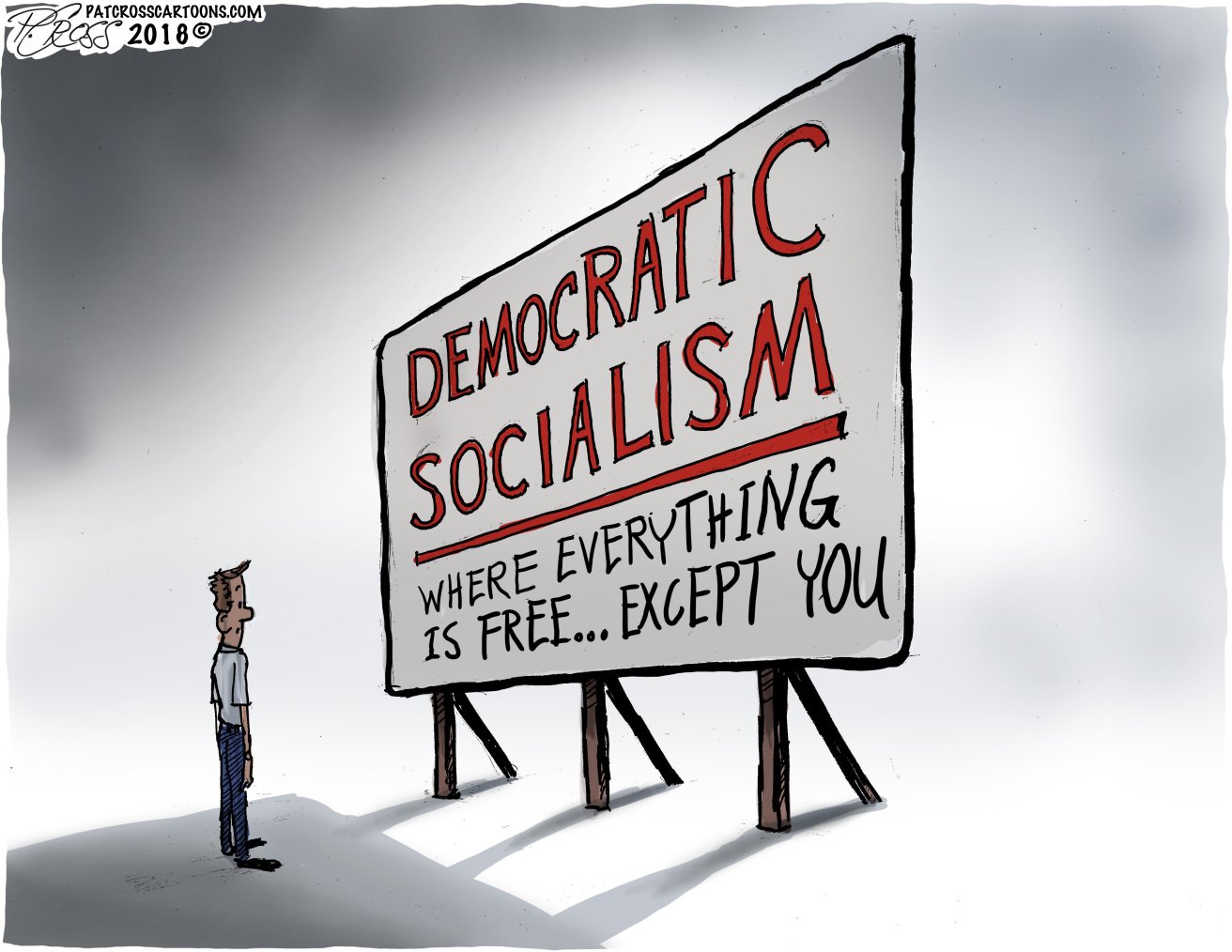
This made Jacinda Ardern a child of the poster for Agenda 2030, the United Nations blueprint for modern socialism, but New Zealanders found that we were used as guinea pigs in international socialist experiments. Almost unaware.

In a speech at the 2018 International Conference on Sustainable Development in New York, the Prime Minister expressed his intention to lead the world by fully incorporating the Agenda 2030 Sustainable Development Goals (SDGs) into domestic affairs. It was. Other countries have done it before and have incorporated indicators like the SDGs into everything we do. “
She said the government no longer relies on traditional progress indicators such as “economic growth” and instead introduces new experimental indicators. “… establishing a whole new indicator of national achievement beyond growth … the standard of living framework we have created a tool called. It has the concept of sustainable intergenerational well-being. At the heart of various decision-making processes – policy advice, government spending, and long-term management of our assets.

“Our statistics department is working on an ambitious project called Indicators Aotearoa New Zealand, which aims to create a comprehensive set of indicators of New Zealanders’ current and future well-being. . Economical, cultural, social and environmental.
“These new tools will help us achieve and monitor the achievement of goals like the SDGs. The first test of this new approach will be early next year. At that time, we will use these new tools and new approaches. We provide the first budget. We call it the Happiness Budget and are not shy about investing in alternation of generations … “
Just before the 2019 “welfare” budget was announced, the Prime Minister explained to a New Zealand business audience what the new approach of the government would entail. “Economic growth is important and we continue to pursue, but that alone is the standard of living for New Zealanders … This year, the new well-being budget will allow us to lay a strong foundation for both our country and our people. I hope we can do it.

The mainstream media doesn’t seem to focus on Jacinda Ardern’s commitment to Agenda 2030, which is not surprising given the imbalance.
This week’s NZCPR guest commentator, Dr. Oliver Hartwich, Chief Executive Officer of the New Zealand Initiative, explains how difficult it is to speak openly to the government, especially in this country.

“Our small population fosters social adaptability that makes it difficult to speak our hearts. We cannot afford to burn the bridge because of the two gaps.
“Most of us no longer doubt whether it is based on reality, and anyone who does so is called non-patriotic and trivial, so risk falling apart. Please let me do it anyway. “
Dr. Hartwitch is particularly critical of housing-related policy failures. As he says, if there’s one thing New Zealand doesn’t lack, it’s space to build a house. Still, the high cost of the New Zealand section, combined with excessive bureaucratic planning and excessive building regulations, has led to the “most expensive” housing market in developed countries.
The lack of affordable housing has been such a scandal for many years, and successive governments have prioritized fixing it. However, it is of little use, so the ideological framework that caused the problem in the first place is well established.

The housing crisis originated in Agenda 21 of the United Nations, the predecessor of 2030, and has had a major impact on New Zealand’s private property rights for over 20 years. Designed to prevent “urban sprawl,” “smart growth” policies are being imposed by council planners above and below the country, creating a serious shortage of residential land. The impact is clear – higher section prices contributing to the current home affordability crisis.

Agenda 21 was founded by the United Nations in 1992, dating back to the first Earth Summit in Sweden in 1972. Based on the idea that humans are destroying the earth, we are trying to control our lives with sensible sounds. Reaching a “Sustainable Development” Policy Mechanism – Meet the needs of current generations without compromising the needs of future generations.
When the United Nations updated Agenda 21 to Agenda 2030 in 2015, they highlighted 17 Sustainable Development Goals to manage every aspect of our lives. From the end of poverty to the intensification of cities and the elimination of inequality, the United Nations has planned it all.

The following summary of Agenda 2030 goals from the United Nations website does not justify the complexity of the proposed restrictions. Learn more about.
– Goal 1. End all forms of poverty
– Goal 2. End hunger and promote sustainable agriculture
– Goal 3. Ensuring a healthy life and promoting well-being for all ages
– Goal 4. Ensuring comprehensive, equitable and quality education
– Goal 5. Achieve gender equality and empower all women and girls
– Goal 6. Ensure sustainable management of water and sanitation
– Goal 7. Ensuring access to sustainable energy
– Goal 8. Promote sustainable economic growth and decent work for all
– Goal 9. Promote comprehensive and sustainable industrialization
– Goal 10. Reduce national and domestic inequality
– Goal 11. Make cities and human settlements sustainable
– Goal 12. Ensure sustainable consumption and production patterns
– Goal 13. Take urgent action to combat climate change
– Goal 14. Sustainable use of the ocean
– Goal 15. Promote sustainable use of terrestrial ecosystems and stop biodiversity loss
– Goal 16. Promote inclusive societies and institutions for sustainable development
– Goal 17. Strengthen global partnerships for sustainable development

The UN concept was big and bold. They wanted a change in which every sector of society needed to mobilize 10 years of action. “To secure greater leadership, more resources … the necessary transitions to governments, cities, local governments … and include youth, civil society, the media, the private sector, trade unions, academia and other stakeholders. People’s actions create an unstoppable movement that drives the necessary changes.

At the heart of Agenda 2030, it is the “climate emergency” that justifies the need for “urgent” action. It is used to justify more regulation and control, claiming that humanity is destroying the planet. As a result, wildfires, droughts, floods and storms are all advertised as “evidence” that the global warming Armageddon is imminent. And it can only be avoided if countries take action to achieve UN goals, such as the redistribution of wealth. Poor countries.
In fact, this is the new face of socialism. The first is Agenda 21. Currently it is Agenda 2030. Next is “Agenda 2050”. For a new era socialist like Jacinda Ardern, “equality” is by no means equal enough, so it never stops.

Old school socialism fought the working class against the ruling class, but under the fundamental premise that exploiting the poor makes the rich richer, socialism is now in the struggle for equality. I changed my appearance. The underlying premise today is that it is fair to take from those who have it and give it to those who do not.
It has evolved into an obsession with equality of wealth, rather than all the most important principles of equal opportunity.
It’s a matter of dividing the country now. But the difference between New Zealand and most other counties is that there is no public debate here. We are transforming into a socialist country, but there is no full disclosure by the politicians driving this fundamental change.

There was no effective media investigation into these developments, nor was there an effective scrutiny from opposition politicians.
As a result, as Dr. Hartwitch points out, it is becoming increasingly difficult to discuss these issues freely. Especially now, the media is very openly biased to the left. In fact, it is our society that the Fourth Estate, once a guardian of truth, is now part of the problem and that much of the media has crossed the line from critical analysis and fact reporting to politics. It’s a tragedy for me. Advocacy.

Given the current lack of a balanced view, access to information has never been easier, but access to the truth has certainly never been more difficult. It’s ironic.
Behind the smile lies the most radical socialist government in our history, with the Prime Minister intending to incorporate the purpose of the world’s most socialist organizations into our policy and legislative framework. There is no doubt that it is.

To fight back, you need to start calling out what socialism is, but to call it out, you first need to lift the veil to find out what’s going on.
Next, we need to decide whether we want to be a socialist society that gives from those who achieve it to those who don’t, or whether New Zealand aims to be an opportunity society where everyone has a chance to improve. Myself and my family.

In other words, should New Zealand follow the path to socialism under the United Nations Agenda 2030, or should we respect people’s individualism and freedom and ensure that they have the opportunity to move forward? ??

In the latter case, by the time of the next election, we have a lot to stand up and speak together!

New Zealand’s Road to UN Agenda 2030
Source link New Zealand’s Road to UN Agenda 2030
LINK: https://eminetra.co.nz/new-zealands-road-to-un-agenda-2030/80172/

...

NEW ZEALAND – A CASHLESS SOCIETY

The idea of a cashless society is not a new one, and in some form or another, has been tossed around for decades. With the onslaught of COVID-19, concerns have been raised on whether handling cash can spread the virus. This has once more ramped up the discussion of America becoming a cashless society.
Essentially a cashless society means exactly that. No cash. Nothing. Zilch

Its a fact that a cashless society is is not perfect. Catastrophes, computer glitches or even human error can leave you without the ability to purchase necessities. The Balance points out that these same events make it impossible for merchants to accept payments as well.
A cashless society would leave people more susceptible to economic failure on an individual basis: if a hacker, bureaucratic error, or natural disaster shuts a consumer out of their account, the lack of a cash option would leave them few alternatives

What would happen to these individuals in a cashless society had no ability to open a bank account or had their bank account cancelled, it would become very difficult, if not impossible, for these individuals to purchase necessities.

Basically we are moving into a cashless Orwellian society, where they check everything. Check where you live, whom you visit and communicate with and how your mind works that makes you behave the way you do. Just another massive stepping stone to control populations.

Living in a cashless society also increases the risks of loss of security, privacy as people become even more reliant on technology and the information age. The information age of data modelling that produces so called evidence based results, it’s bad enough now but its going to get so much worse.

Other risks are, its takes a chunk out of small business profits, that’s if you are lucky enough to own a small business after Ardern’s government have finished stripping us all of our rights. Of course when you pay for products with a bank card then in tis digital world the information gained is huge, where you shop, what eat etc.

This new wonderful world of enlightenment and utopia is suppose to be so trusting NOT. A utopian cashless society is merely a mirage, another delusionary socialist, Marxist communist ploy.
Approximately 500 years ago Thomas More’s Utopia has influenced everything from the thinking of Gandhi to the tech giants of Silicon Valley,. More is best known for his invention of a word – and for his development of an idea that would be exported around the world. This concept would shape books, philosophies and political movements as varied as Daniel Defoe’s Robinson Crusoe, Mahatma Gandhi’s doctrine of passive resistance and the founding of the state of Pennsylvania. The idea, of course, was ‘utopia’.
More coined the word to describe an island community with an ideal mode of government. First published in Latin in 1517, the book Utopia means “no place” in Greek; Some coined the word utopia to describe an island community with an ideal mode of government

More’s Utopia was not the first literary work to play around with policy ideas: dreaming of a better life is an innate part of being human. Is vision was attractive to early socialists who saw this imaginary society as a blueprint for a socialist nation. These became known as the ‘utopian socialists’. Those who favoured an egalitarian distribution of goods, alongside the total abolition of money in order to achieve perfect social and financial equality.

Animal Farm by George Orwell brilliantly exposed the flaws in the communist view of society. The novel offers a view of human behaviour at odds with the philosophies and principles of a ‘perfect society’ as described in Utopia.
Many advocates of the ‘cashless society’ suggest it could offer a better and more-efficient world, but do they also fail to see how the behaviour of humans means the utopia of a cashless society is merely a mirage?

Utopia goes even further back in history to 380BC, when Plato wrote his dialogue, he described it as a communistic egalitarian city-state ruled by philosopher-kings called guardians, made up of both men and women. Instead of procreating within a family unit, these leaders leave the city once a year for a wild sex orgy. The resulting children, happily ignorant of their real parentage and brought up by the state, become the new generation of guardians.

For some people a cashless society may sound like science fiction, however its very real. Citibank and other financial institutions are already discussing, planning this.
The Computer Weekly News on 17/11/2016 reported, Citibank will no longer handle cash at its six branches in … which has been identified as potentially being the first cashless society, Today Citibank call this ‘banking for sustainable development’ (UN Agenda 2030)

The Reserve Bank of New Zealand documented a government paper entitled “Future of Money-Te Moni Anamata. Have your say (a what do you think article).
Below is part of the article a link is provided:-
The Reserve Bank is inviting your feedback on a series of issues papers to test our thinking about how we should approach our new role as steward of the cash system and make sure that central bank money continues to do its job in light of significant changes affecting how New Zealanders pay, receive and save money.
Future of Money – Stewardship (Te Moni Anamata – Kaitiakitanga) seeks your feedback on how we should steward of money and cash following a recent law change. • Future of Money – Central Bank Digital Currency ( Te Moni Anamata – Aparangi ā Te Pūtea Matua) wants your views on how we propose to explore whether a CBDC is right for Aotearoa.
You can both read and give your feedback online for these issues papers by 10am, Monday, 6 December 2021. • Future of Money – Cash System (Te Moni Anamata – Punaha) to publish in November 2021 will explain issues facing the cash system and explore options to achieve greater efficiency and resilience. Feedback will close in February 2022
The link is below and well worth a read.

https://www.rbnz.govt.nz/-/media/ReserveBank/Files/Notes%20and%20coins/Future-of-Money/Future-of-Money-issues-overview.pdf?revision=c7b72a5f-4924-43ef-bd5f-f109db8bfbf2&la=en.

...