CORPORATE CAPTURE OF GLOBAL FOOD SYSTEMS ‘ THE COLLABORATION BETWEEN THE WEF AND UN FOOD  AGRICULTURE ORGANIZATION (FAO)

CORPORATE CAPTURE OF GLOBAL FOOD SYSTEMS ‘ THE COLLABORATION BETWEEN THE WEF AND UN FOOD  AGRICULTURE ORGANIZATION (FAO)

The Un / WEF Official Partnership was officially adopted 13th June 2019. With a Proviso to jointly  accelerate UN Agenda 2030 Global Goals across the world. (SDGs) Transforming Our Lives By 2030. Leaving No-one Behind- Everyone-Everywhere at Every Age. To collaborate Global Food Security * Transform Agri-food Systems. Resource Management * Digital Global Innovation * Public-Private Partnerships * Multistakeholder Capitalism

However there have been many critics that have raised multiple concerns primarily Civil Society Organizations about the Conflicts of Interests * The Influence of Private Corporation as whisperers in the ears of UN Agencies .This includes the Corporate Capture of the Global Food System and the UN FAO’s role in the Global Food Initiatives that include:-Strategic Partnerships with Corporations (a wide range of stakeholders) including UN Entities * Governments * Leaders of Civil Society and the Private Sector (The Mask they hide behind is (Eradicating Hunger- Poverty World Wide) Global Agenda 2030- SDG 1 and SDG2

The FAO (UN) works in a broader UN Framework in that of Food Security & Nutrition. Guiding Global, Regional and National efforts into Policy & Decision making. And encourages Multistake-holderism dialogue, developing common approaches to Global Food Systems. Supporting UN Member States to create coalitions of Public-Private Actors to foster Agri-food System Transformation. The deepening of institutional engagement as to Global Challenges such as Climate Change – Health – and the coined phrase ‘Sustainable Development

The WEF-UN Collaboration (Partnership) with the FAO (UN)..In 2022 they signed a Letter of Intent to facilitate the channeling of the Private Sector resources towards Transforming Agri-food Systems worldwide. The WEF launched the Food Innovation Hubs Global Initiative with FAO (UN) as the Collaborator. Leveraging Market Based Partnerships with Public-Private and Civil Society Partners to Scale Up Innovations

Critics have reported that the UNs growing collaboration with the WEF is a platform for Transnational Corporations that allows ‘Global Corporate Capture’ and a dialogue of  Global Decision Making. 240 Civil Society Organizations condemned the 2019 WEF-UN Partnership in an Open Letter stating that it ‘Delegitimizes the UN and weakens the role of UN Member States in Global Decision Making – Increasing the influence of corporations, promoting industrial, technological focused solution to Food Security which risks harming small scale farming practices, causing socio-economical problems. Favoring Corporate Interests over that of vulnerable populations-Threatening Human Rights.

Giving disproportionate power to Corporate Interests, undermining  the Democratic State Nature of the UN as it was originally set out to be. With the WEF & UN public-private relationship increasing investment in Agrifood systems, aborting traditional farming. Collaborating on Data & Digital conditions that produce WEF/UN Initiatives Eg: (One Map & the Future Market Place Playbook) With the FAO (UN) and WEF Co-publishing a White Paper titled ‘Transforming Food Systems for Country Led Innovation’

The WEF/FAO (UN) Food Summit and the Digital and Data Coalition. The WEF long standing relations with UN Agencies. The Alignment of Food Systems Transformation.  Inclusive Partnerships with common goals. The common goal of Transforming Global Food Systems. Providing Data and Stats crucial for informing Policy and Tracking Progress in the Transformation of Global Food Systems

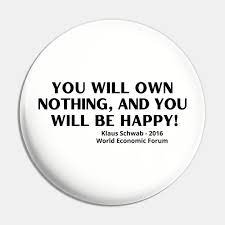
Partnerships that are focused on attracting Investment for the Transformation of Global Food Systems, this includes how Food is Produced, Distributed and Consumed globally. The total destruction of the Free-market Enterprise Innovated Economy (The Freedom To Choose). Multistakeholder Capitalism Klaus Schwabs baby (600 Page Global Redesign Initiative 2010) Produced and adopted post the 2008-2009 World  Financial Recession. Adopted by Governments worldwide

Critics state that this approach shifts Economic Governance away from Competitive Markets towards a model of Self Appointed Group of Corporate and Political Elites. There are also many critics that view the annual DAVOS gatherings as an Undemocratic Opaque Governance Venue where powerful political and corporate leaders make decisions without accountability to the public they represent in UN Member Nation States thus diminishing National Sovereignty

Never let a Good Crisis Go To Waste. Large Corporate Interests that prioritize Conformity over Disruption. The WEF is accused of ‘Crony Capitalism’. Where Corporations use their influence to lobby for favorable regulations and protectionism through Legislations at the expense of a genuine Free-Market enterprising Innovative Economy. Corporations accused of Green Washing (ESG’s)

Initiatives such as the Great Reset proposed by the WEF, advocating for the restructuring of the Global Economy. The lack of Democratic Engagement within UN Member Nation States and Beyond -Globally that do not reflect the interests of UN Member State or Global Population interests but those of the Economical /Political Elite. The Stakeholder Capitalism model seeks to shift responsibility beyond shareholders to a broader group of stakeholders has been criticized as rebranding of the worlds economy. And the Erosion of National Sovereignty

The increasing influence of the WEF over UN Nation State policies and the erosion of National Sovereignty is not without serious concern. The WEF pushing for Global Governance Models that by-pass Nation State Legislatures without civil societies explicit consent. The WEF Global Digital Identification Systems, * Centralized Climate Policies * International Tax Frameworks all encroachments on Nation State Government and the voting public of the Sovereign Nation State. Decision making that cannot be challenged, hence the government is not held accountable by its voting  citizens

The WEF a strong powerful proponent of the Forth Industrial Revolution which encompasses Artificial Intelligence * Automation * Biotechnology being implemented even though populations worldwide have serious concerns about this push into a Technocratic Future of Controlling Forces of Compliancy. The WEF reporting its Vision ‘A Technology Driven Future that includes Mass Digital Surveillance which is being played out rapidly across the world eight now. AI Digital Identification Global Governance (Transforming Our Live by 2030. UN Agenda 2030 SDG 16.9 Everyone is to have a digital ID by 2030) Otherwise you wont be recognized as existing.

NZ participating in the WEF Pilot ‘Digital Regulations’. Without transparency. Did the Government share this information publicly? NO. Was there any public discussion- debate with  the population of NZ. No.  WEF mass digital surveillance, monitoring and a push for a ‘cashless society’. Digital Identity Systems. Government/Corporate surveillance restricting individual autonomy- freedoms- liberties. (Judith Collins Portfolio)

COVID 19 – The WEF played an increasing significant role in shaping Global Health Policies particularly during the COVID Pandemic. Collaborating with Organizations like the WHO (UN) and major Pharmaceutical companies (Big Pharma) to influence  Vax Policies, Digital Health Passes and Pandemic Preparedness Strategies. Concerns have been raised about the WEFs role in promoting policies that benefit Bif Pharma at the expense of transparency and Public Choice. The rapid push for vaccine mandates and Digital Health Passports seen by some as an over-reach prioritizing Corporate Interests over Individual Freedoms

The WEF and the UN have positioned themselves as a global force, with zilch accountability to National Sovereignty and the people whom vote political parties in. This empowers a small global powerful elite to shape the Global Future that do not align with the broader interests of Humanity. This is a global concentration of centralized power (Top Down and Bottom Up) that poses a huge risk to our personal- individual freedoms. Where Governments engage with the WEF /UN behind closed doors when they collaboration – plan to implement the Transforming Of Our Lives before 2030. (Leaving No-One Behind..Everyone..Everywhere.. At Every Age)

We No… What They Are Doing.. They Know- We know what they are Doing.. But they still keep on Doing it.. Yet there is a deafening Silence in the public Arena as the UN Member State Puppets implement ‘Transforming Our Lives By 2030’ Locking us into a Digital Prison. Industrial Corporate Global Food Systems and Smart City Surveillance-Monitoring-Facial Recognition.

WakeUpNZ.. RESEARCHER: Cassie


...

Other Blog Posts

THE DYNAMICS OF ‘WHITE SUPREMACY’ BEING PLAYED OUT IN NEW ZEALAND (The Decolonization of New Zealand)

REFERS TO: WHITE PRIVILEGE IN NEW ZEALAND: This 162 page document states that “. White supremacy, whiteness, white culture and white norms carry the belief that Western European cultures are superior and Indigenous peoples inferior and less worthy” Racism and white supremacy are integral to colonization and colonization is integral to racism and white supremacy

The dynamics, impacts of white supremacy, racism, colonialism upon Tanga Whenua in Aotearoa New Zealand (The Human Rights Commission NZ). The Human Rights Commission works under the Crown Entities Act 2004 and Human Rights Act 1993. Independent of Government. The commission is accredited an ‘A; status under the National Human Rights Institution under the Paris Principles. Authored and published the Maranga Mai this included drafts from the Iwi National Chairs Forum. Claire Charters key member of the Iwi National Chairs Forum  is employed part-time in the Human Rights Commission.

This lengthy report called the Maranga Mai documents compelling story telling of white supremacy, racism referring to the early colonial settlers of NZ. This report calls for meaningful pathway to reconciliation and justice by 2040 for Iwi/Maori reference is made to the ‘Indigenous Peoples’ Rights group of the NZ Human Rights Commission. The National Iwi Chairs Forum and numerous others also played indispensable roles in the preparation of Maranga Mai! On behalf of the Commission’s board, Race Relations Commissioner Meng Foon, has shouldered responsibility for securing rich and dynamic community engagement for the NAPAR, including supporting the preparation of Maranga Mai! Signed by Chief Human Rights Commissioner Paul Hunt

Maranga Mai calls for Constitutional Change. The Minister of Justice (Government ) is involved as follows:  . National Action Plan Against Racism (NAPAR) for Aotearoa. The Ministry of Justice is responsible for developing the plan and has partnered with the National Iwi Chairs Forum – a collective of iwi leaders from Aotearoa – on its creation. Stating that “New Zealanders need to understand that colonization, racism and white supremacy are intertwined phenomena that remain central to the ongoing displacement and erosion of tino rangatiratanga. The cumulative effects of this are evident in the intergenerational inequalities and inequities tangata whenua suffer across all aspects of their lives. These serious matters are the focus of this report”

Maranga Mai! documents the dynamics and impact of colonization, racism and white supremacy on Māori in Aotearoa New Zealand since first contact with Europeans. This report has been written by Ahi Kaa, the Indigenous Rights Group, within the Commission and tangata whenua, within the framework of Te Tiriti o Waitangi. amplifies Māori voices, memories and experiences, the value of which lies in documenting lived inter-generational and cumulative insights of how Māori have experienced colonization, racism and white supremacy (Smith, 2013; Creswell, 2013).

Maranga Mai! adds to this body of evidence the testimony of experts of the Tangata Whenua Caucus of the National Anti-Racism Taskforce (2021-2022). Key interviews were conducted with prominent Māori scholars and activists, distinguished Professor Linda Tuhiwai Smith, chair Tina Ngata, Hilda Halkyard-Harawira, Dr Rawiri Taonui and Kingi Snelgar, and the late Dr Moana Jackson. Recommends:- recommendations for the National Action Plan Against Racism (NAPAR). Seek Constitution  transformation to establish Co-Governance references made to Matika Mai Aotearoa and he Pua pua Reports. Recommending the  establishment of an independent Indigenous Rights Commission is also recommended for exploration by the government, with a key function of advancing the NAPAR; developing and delivering a decolonization and anti-racism strategy to assist the further elimination of racism in central and local government and civil society; and supporting the Truth, Reconciliation and Justice Commission.

Recognize tino rangatiratanga is a preexisting and ongoing form of tangata whenua and Indigenous authority and self determination under Te Tiriti (Article Two) and the UN Declaration on the Rights of Indigenous Peoples (UNDRIP) (2007). Rosemary Banks represented the NZ Labour Govt 13th September 2007. NZ rejected the UN Declaration on the Rights of Indigenous People for very clear reasons as to why New Zealand should not accept the UN Declaration now. NZ Rejected the UNDRIP in 2007. John Key sent Pita Sharples Deputy Leaders Māori Party under a veil of secrecy to the UN to sign the UNDRIP. NZ Labour Government refused to sign the UN Declaration for the following reasons:- This included four provisions within the text hence including the following – Non-compliant with Legalities, Constitutional arrangements of New Zealand and the Treaty Of Waitangi. Undemocratic, Two classes of Citizenship. No acknowledgement of Property Rights as Māori (Indigenous People) would have the control, ownership of the entire lands of New Zealand, does not acknowledge that others legally have ownership, rent, lease land. Control of Natural Resources. Veto rights that others do not have. Veto rights over parliamentary legislation. Redress (Compensation) of entire lands of New Zealand. Two Classes of Citizenship

As for David Seymour’s Treaty Bill this should throw a light on why certain Iwi Māori are so angry because if Seymour were to get it to referenda stage, and majority of NZrs voted for it, this would certainly put paid to the UNDRIP being implemented in NZ. It’s the legislative, Waitangi Tribunal political over-reach and the Judicial that has allowed the UNDRIP which is a non-binding declaration to become such a major issue in New Zealand. Just because it is non-binding it has embedded in it International Human Rights, which can be used to legislate it, enter it into Domestic Law.  However under UN International Law a group of people cannot adopt a UN Declaration, agreement. I therefore personally believe it was a certain Iwi/Māori group that arranged with the Māori Party Peter Sharples to collaborate with John Key for Sharples to travel to the UN to sign this.

21st November 2022 a two day convention took place, organized by Claire Charters, who now is on the Human Rights Commission NZ this convention attracted overseas visitors. The title of the convention being ‘Kerero Convention’ the think tank for implementing the UNDRIP  by replacing NZ’s Constitutional Arrangements, with a Constitution that aligns with the Treaty Of Waitangi (Both 1835 Declaration of Independence and 1840 Te Tiriti o Waitangi) aligning these with the implementation of the UNDRIP.

The Iwi Chairs Forum is working in partnership with the Ministry of Justice in the development of the proposed action plan against racism. Additionally, as we pointed out in Human Rights Commission partners with Iwi Chairs’ Forum(DA news April 2023), the Human Rights Commission also has a very close relationship the Forum. Undoubtedly, a case of co-governance in action! “History shows that race-based societies fail. No tribally based society has ever succeeded in the modern world. And yet New Zealand is rapidly racializing and tribalizing its system of central and local government and other institutions.  it is time for the HRC to return to its core statutory obligations

This whole 162 Page Report is based on oppressor vs oppressed. Shuts its eyes to what the early colonials brought to NZ, such as schools , hospitals, Christianity, railways, dug tunnels , pathways through thick bush and forestry, they did not have modern day machinery. Plus stopped tribal feudalism, tribal slavery torture and murder. And because of early colonials Maori now live a significantly lot longer than they did before the early colonials arrived. And the early colonials actually brought to New Zealand many birds too, as the English loved their garden birds. For the early colonials did not jump on a plane to travel to New Zealand they spent on average 6 months to sail from the UK to New Zealand. Many people were seriously ill, some died and never made it to their destination. It was uncomfortable, wet  and cold, a miserable voyage with bad, inadequate rations of food. Immigrants were subjected to a great variety of conditions en route. Storms in the English Channel or the Bay of Biscay were followed by pleasant sailing in the trade winds. In the equatorial doldrums, awnings were often raised over the decks to provide shade from the incessant sun. Storms were encountered again in the Southern Ocean or Tasman Sea, sending ships tumbling and rolling. They were hardly what you would call ‘white privileged, majority of them were hard working people.

RESEARCHER: Carol Sakey

LINKS:  https://tikatangata.org.nz/cms/assets/Documents/Maranga-Mai_Full-Report_PDF.pdf  162 Pages       https://teara.govt.nz/en/the-voyage-out/page-1            https://www.democracyaction.org.nz/commission_a_mission_to_destroy_democracy


...

ICE FREE DOES NOT MEAN FREE OF ICE ‘ANTACTICA ROSS SHELF’

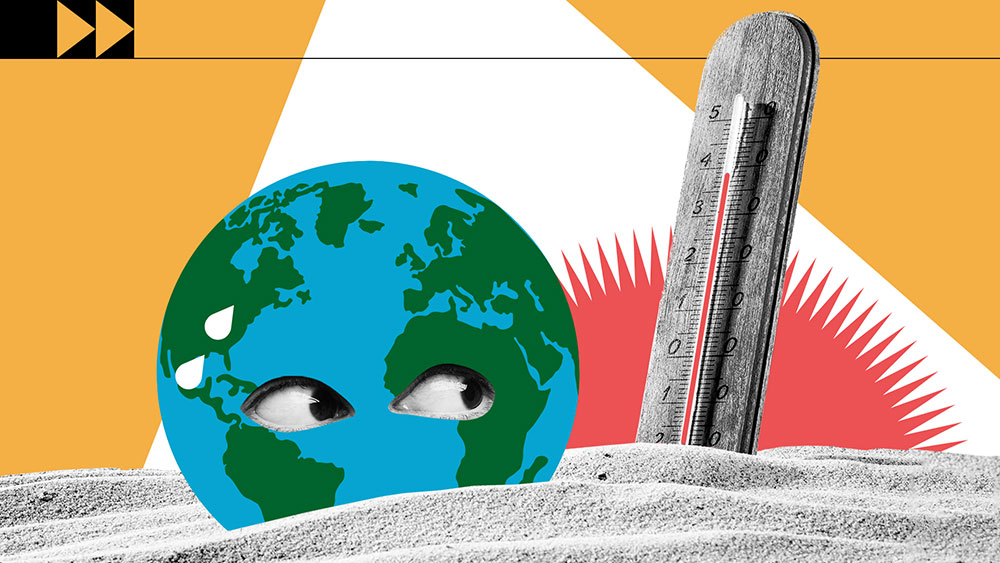
Antarctica is almost entirely covered by ice sheets up to two miles (3 km) thick, which contain roughly 70% of the world’s freshwater. The great ice sheets spill out to sea as floating ice-shelves and ice-tongues, which routinely calve massive icebergs into the waters around Antarctica. The Ross Sea ice shelf is one the largest ice shelves in the world. It is the size of France, and though the 200-foot-tall cliffs of ice extend 500 miles, that is just, as they say, the tip of the iceberg. Most of the ice lies hidden below the cold, dark salt water.

The Ross Ice Shelf is freezing not melting scientists say they are surprised to find this. (Feb 23rd 2018). The report states that “In November, scientists from New Zealand used a hot water drill to go deep into Antarctica’s Ross Ice Shelf. The shelf, which can be up to 10,000 feet thick, is the largest of several that hold back West Antarctica’s massive amounts of ice. If these were to collapse, global sea level would rise by ten feet. Drilling a hole and lowering a camera and thermometer inside is a way for researchers to understand the history of the shelf, and what is happening to it now. In measuring the temperature and currents below the shelf, they expected to find that the ice was melting.

Instead, the water appeared to be crystalizing and freezing. In the video from National Geographic below, you can see the white dots of ice crystals as the camera is lowered towards the dark sea below. If the shelf was melting, the hole at that level would have smooth sides. “It blew our minds,” Christina Hulbe, the glaciologist from the University of Otago in New Zealand, who co-led the project, told National Geographic.

Scientists have left instruments deep in the hole to measure currents and temperatures below the shelf for the next few years. Though the freezing seems to be a promising sign for the shelf’s stability, it doesn’t tell the whole picture. Scientists also hope to learn whether the ice shelf has melted in the past due to other climate shifts.

However, the NZ Scientists state that NASA confirmed we are losing ice much faster , and of course more research has to be done on the Ross Ice Shelf  (Of course-for the sake of climate alarmism-bullshite)

One of the leading authorities on the physics of the northern seas predicted an ‘ice-free’ Artic Ocean by the year 2020 (Source UN). Alaska News 3/11/2014 updated 29/9/2016. UN releases Climate Report ‘Ice Free’ does not really mean ‘Free of Ice’

Closer to home, David Seymour- ACT Party authored a book in 2017 stating that however much NZ cuts back on emissions they will make no difference to climate change but they will be good global citizens.

Source of Info National Geographic

RESEARCHER: Carol Sakey

LINK   https://www.popularmechanics.com/science/environment/a18697409/ross-ice-shelf-melting/


...

BYRON CLARK’S CLIMATE ALARMISM NIGHT SCHOOL

Byron Clark is a self appointed so called expert in New Zealand Far Right, Alt Right Extremism. An expert in character assassinating those who opposed the COVID Jabs of those people  whom sought medical freedom as he targeted them with the phrase ‘anti-vaxer’s’, now he is a self proclaimed expert in Climate.  My personal opinion is that he is an ‘arse-wipe’, targeting law abiding citizens of New Zealand. He has recently been awarded a monetary prize for his expertise on disinformation. Clark has the credentials of being an expert liar. I personally believe he is a danger to all law abiding New Zealander’s. Clark and Henks Night School Project is being established in NZ and US, some are calling this a global night school on Climate change disinformation

Reference made to Tohatoha Aotearoa (Incorporated)

VIDEO VIEWING TIME  6 MINUTES

...

IT’S TIME TO RETHINK INDIGENOUS ‘ SOME GROUPS IDENTIFY AS INDIGENOUS BUT DO NOT CLAIM TO BEE INDIGENOUS

It’s Time to Rethink the Idea of the “Indigenous” Many groups who identify as Indigenous don’t claim to be first peoples; many who did come first don’t claim to be Indigenous. Can the concept escape its colonial past? By a News Article in the New Yorker  Author Manvir Singh February 20th 2023

IDENTITY: Identity evolves. Social categories shrink or expand, become stiffer or more elastic, more specific or more abstract. What it means to be white or Black, Indian or American, able-bodied or not shifts as we tussle over language, as new groups take on those labels and others strip them away. On August 3, 1989, the Indigenous identity evolved. Moringe ole Parkipuny, a Maasai activist and a former member of the Tanzanian Parliament, spoke before the U.N. Working Group on Indigenous Populations, in Geneva—the first African ever to do so. “Our cultures and way of life are viewed as outmoded, inimical to national pride, and a hindrance to progress,” he said. As a result, pastoralists like the Maasai, along with hunter-gatherers, “suffer from common problems which characterize the plight of indigenous peoples throughout the world. The most fundamental rights to maintain our specific cultural identity and the land that constitutes the foundation of our existence as a people are not respected by the state and fellow citizens who belong to the mainstream population.”

THE MAASAI TRIBE TANZANIA: Parkipuny’s speech was the culmination of an astonishing ascent. Born in a remote village near Tanzania’s Rift Valley, he attended school after British authorities demanded that each family “contribute” a son to be educated. His grandfather urged him to flunk out, but he refused. “I already had a sense of how Maasai were being treated,” he told the anthropologist Dorothy Hodgson in 2005. “I decided I must go on.” He eventually earned an M.A. in development studies from the University of Dar es Salaam. In his master’s thesis, Parkipuny condemned the Masai Range Project, a twenty-million-dollar scheme funded by the U.S. Agency for International Development to boost livestock productivity. Naturally, then, U.S.A.I.D. was resistant when the Tanzanian government hired him to join the project. In the end, he was sent to the United States to learn about “proper ranches.” He travelled around until, one day, a Navajo man invited him to visit the Navajo Nation, the reservation in the Southwest. “I stayed with them for two weeks, and then with the Hopi for two weeks,” he told Hodgson. “It was my first introduction to the indigenous world. I was struck by the similarities of our problems.” The disrepair of the roads reminded him of the poor condition of cattle trails in Maasailand.

VOCAL ACTIVIST: Parkipuny had always thrived on confrontations with authority. Once, as a high schooler, he was nearly expelled when he burned grass (the Maasai method of bush clearing) instead of cutting it, as instructed. He later recalled that, when the headmaster threatened to hit him, he replied, “If you beat me with a stick I will get mine, because my traditions do not allow this. I ask you to give me another punishment.” This outspokenness propelled his activism. Following his American sojourn, he started to publicize the Maasai’s plight in international circles, linking it with other struggles. He met members of tribal nations in New Mexico and Canada to sharpen his understanding of Indigenous issues, and allied with the International Work Group for Indigenous Affairs, headquartered in Copenhagen.

PARKIPUNY’S COINED PHRASE ‘INDIGENOUS PEOPLE: By the time Parkipuny showed up in Geneva, the concept of “indigenous” had already undergone major transformations. The word—from the Latin indigena, meaning “native” or “sprung from the land”—has been used in English since at least 1588, when a diplomat referred to Samoyed peoples in Siberia as “Indigenæ, or people bred upon that very soil.” Like “native,” “indigenous” was used not just for people but for flora and fauna as well, suffusing the term with an air of wildness and detaching it from history and civilization. The racial flavor intensified during the colonial period until, again like “native,” “indigenous” served as a partition, distinguishing white settlers—and, in many cases, their slaves—from the non-Europeans who occupied lands before them.

INDIGENOUS PEOPLE BECAME A GLOBAL MOVEMENT: Then came the nineteen-sixties and seventies. Liberation movements flourished. In New Zealand, the Polynesian Panthers worked with the group Ngā Tamatoa to rally for Maori rights. In the United States, the Red Power movement spawned groups like the American Indian Movement and the International Indian Treaty Council. Inspired by decolonization, activists from these groups coalesced, turning indigeneity into a global identity. What linked its members was firstness. Peoples like the Maori and the Sioux are not just marginalized minorities, activists stressed; they are aboriginal nations whose land and sovereignty have been usurped. With time, however, the identity was stretched further. When Parkipuny showed up in Geneva, activists were consciously remodeling indigeneity to encompass marginalized peoples worldwide, including, with Parkipuny’s help, in Africa.

THE INDIGENOUS WORLD YEAR BOOK: Today, nearly half a billion people qualify as Indigenous. If they were a single country, it would be the world’s third most populous, behind China and India. Exactly who counts as Indigenous, however, is far from clear. A video for the U.N. Permanent Forum on Indigenous Issues begins, “They were always here—the original inhabitants.” Yet many peoples who are now considered Indigenous don’t claim to be aboriginal—the Maasai among them. According to Maasai oral histories, their ancestors arrived in Tanzania several hundred years ago from a homeland they call Kerio, likely situated near South Sudan.  Conversely, being first doesn’t seem to make you Indigenous. A handful of Gaelic monks and then the Vikings were the first people to arrive in Iceland (they settled there earlier than the Maori arrived in New Zealand), yet their descendants, the Icelanders, are rarely touted as Indigenous. Farther east, modern-day Scandinavians can trace most of their ancestry to migrations occurring in 4000 and in 2500 B.C., but it’s the Sami reindeer herders, whose Siberian ancestors arrived in Scandinavia closer to 1500 B.C., who get an annual entry in the “Indigenous World” yearbook.

THE RESTORY TELLING OF INDIGENOUS CULTURES: In place of firstness, a U.N. fact sheet lists self-identification as the key criterion. This doesn’t quite work, either. It is true that some surprising candidates have gained recognition through activist self-designation, such as the Mincéirs of Ireland. (The Mincéirs, sometimes mistakenly called “Irish gypsies,” may have separated from the settled Irish population only several hundred years ago.) Other such groups have been denied recognition. In 1999, when Basters, mixed-race descendants of Khoi pastoralists and Afrikaners, read a statement at a U.N. forum about Indigenous affairs, hundreds of delegates walked out in protest. At the same time, many people are called Indigenous without their knowledge or consent. If it is neither necessary nor sufficient for the Indigenous to be indigenous, what fills the conceptual space? A natural candidate, worryingly, is primitiveness. As several recent books show, centuries of colonialism have entangled indigeneity with outdated images of simple, timeless peoples unsullied by history. In “Beyond Settler Time,” Mark Rifkin observes that popular representations freeze Indigenous peoples in “a simulacrum of pastness.” In “Prophets and Ghosts: The Story of Salvage Anthropology,” Samuel J. Redman describes how efforts to document dying Indigenous cultures often centered on a search for “an idyllic, heavily romanticized, and apparently already bygone era of uncorrupted primitive societies.”

INDIGENOUS INTELLECTUALS: The conflation of indigeneity with primitiveness can be stifling. Indigenous intellectuals—including the Lenape scholar Joanne Barker and the Maori scholar Evan Poata-Smith—write about the pressure to adopt identities that are “primordial,” “naturalistic,” and “unchanging.” Fail to do so, they say, and you risk looking inauthentic. Rather than being harmless, Barker notes in “Native Acts” (2011), such standards make it “impossible for Native peoples to narrate the historical and social complexities of cultural exchange, change, and transformation—to claim cultures and identities that are conflicted, messy, uneven, modern, technological, mixed.” Indigeneity is powerful. It can give a platform to the oppressed. It can turn local David-vs.-Goliath struggles into international campaigns. Yet there’s also something troubling about categorizing a wildly diverse array of peoples around the world within a single identity—particularly one born of an ideology of social evolutionism, crafted in white-settler states, and burdened with colonialist baggage. Can the status of “Indigenous” really be globalized without harming the people it is supposed to protect?

THE CANADIAN INDIAN BROTHERHOOD: VISIT NEW ZEALAND: Peoples in Australia, New Zealand, and North America have long sent petitions to British royalty. Two Indigenous leaders—the Haudenosaunee chief Deskaheh and the Maori prophet T. W. Rātana—even appealed to the League of Nations for recognition, in 1923 and 1924, respectively. But before the Second World War Indigenous people appealed to international audiences only as representatives of local groups. To understand the origins of a global Indigenous identity, we need to turn to the activist networks that formed in the nineteen-sixties and seventies. And this means turning to George Manuel. Born in 1921 in the Shuswap territory of British Columbia, Manuel started to think seriously about a global Indigenous identity in 1971. He was then the president of the National Indian Brotherhood, a young organization representing Canada’s two hundred and fifty thousand officially recognized “status Indians.” When the Canadian government arranged for a delegation to go to the South Pacific to learn about the Maoris’ place in New Zealand, Manuel was invited along as the representative of Canada’s Indigenous peoples.

THE COINED PHRASE ‘INDIGENOUS PEOPLES’ BECOMES A TRIBAL INFLUENCER : The start of the trip was frustrating. Like a tourist visiting North Korea, Manuel was whisked from one exhibition to another, presented with a Shangri-La fantasy of the Maori experience. Yet he was determined to escape the spectacle and, when given a chance, he invited Maori politicians and a troupe of Maori entertainers to his hotel room for an honest chat. By this point, Manuel was fluent in the politics of Canada’s First Nations. As he told the Yukon newspaper the Whitehorse Daily later that year, “We want to maintain our special status, our special rights, and we want to go deeper and find evidence to prove we have special rights as the original inhabitants.” What struck him about his unofficial tour was that the Maori were engaged in the same struggle. They, too, were an Indigenous people fighting a white Commonwealth nation for land, representation, and cultural survival: “What we are doing here in Canada is a part of a world wide movement for cultural autonomy and aboriginal rights of native people.”

FROM NEW ZEALAND TO AUSTRALIA EXPANDING WORLDWIDE:” From New Zealand, Manuel travelled to northern Australia, where he encountered even fiercer assimilation campaigns. When invited to talk to an assembly of Aboriginal students, he condemned Australian paternalism and told the students to “be proud you are dark. We have every reason to be as proud as the white man. And maybe more.” He pointed to their shared persecution: “Just as much as the Māori’s and Aborigines, the Indian people in Canada are dark people in a White Commonwealth.” The trip stirred up dreams of a conference that would set the stage for “some more lasting institution.” In October, 1975, the vision materialized. Delegates from nineteen countries—almost all in the Americas or Oceania; none from Africa or Asia—met on the Tseshaht reservation, on Vancouver Island, where they founded the World Council of Indigenous Peoples. Manuel was elected the first president. In the lead-up to the conference, attendees decided not to call themselves “Aboriginal people” and went instead with “Indigenous people,” defined partly as people “who are descendants of the earliest populations living in the area and who do not, as a group, control the national government of the countries within which they live.” The expansion of indigeneity is visible in the history of the World Council, and then in the U.N. Working Group on Indigenous Populations, which was founded in 1982, and—in part because it benefitted from more regular meetings, the resources of the U.N., and the promise of drafting international law—effectively supplanted the council. Across two decades, the working group metamorphosed from an overwhelmingly American assemblage into an international one. At its first meeting, all but one of the ten Indigenous groups represented were from the Americas; in 1984, Asians started showing up, and in 1989 Parkipuny opened the floor for Africans.

A TRANSNATIONAL IDENTITY: The process had its hiccups. The Cuban diplomat who served as a Special Rapporteur for the group in the nineteen-nineties, Miguel Alfonso Martínez, insisted that Asians and Africans could not qualify as Indigenous. Delegates felt otherwise; they sought a truly transnational identity. But, after years of debate, they decided that no objective definition was possible. Even the World Council’s stipulation that an Indigenous people didn’t control the national government wasn’t quite on target. On the one hand, the Icelanders, who haven’t been considered Indigenous, were for a period under the absolute rule of a Danish king. On the other hand, the U.N. deems the Samoans to be Indigenous, and yet they are the dominant social, cultural, and political group of Samoa.

THE UN GLOBAL INDIGENOUS PEOPLE: In a 2021 report on the “State of the World’s Indigenous Peoples,” determined that eighty-six per cent of them live in Asia, Africa, and the Pacific. Who’s entitled to the status remains a subject of contention. Among people living in Minnesota send delegates to the U.N. Permanent Forum on Indigenous Issues, in New York; Dalits in India, the Roma in Eastern Europe, and Christians in Saudi Arabia remain, for the most part, outside the circle of indigeneity. Identifying which criteria are at play is tricky, but anthropologists and social theorists like Adam Kuper and André Béteille argue that our concept of indigeneity is bound up with outdated ideas about so-called primitive peoples. The tropes persist; we have merely replaced one set of terms for another. Even if you are not aboriginal, you can count as Indigenous if you come across as simple, egalitarian, culturally encapsulated, spiritually attuned to nature, and somehow isolated from history and civilization. When Parkipuny appeared in Geneva, the Maasai were well established as emblems of “primitive” Africa. With spears, shields, and stretched earlobes, they adorned postcards, documentaries, travelogues, and coffee-table books. You’d see a stoic, ochre-coated man wearing an ostrich-feather headdress like a lion’s mane, or a woman with a shaved head staring at the camera, her neck lost amid beaded necklaces. Almost always, the Maasai were pictured draped in bold red fabric, a shocking burst of fire in landscapes of brown and green. (Photographers relieve them of their sunglasses and watches.)

INDIGENOUS PEOPLES BECAME A LUCRATIVE BUSINESS: For decades, the Tanzanian government exploited this imagery. As tourism and big-game hunting flourished, photographs of the Maasai decorated brochures and guidebooks: human scenery garnishing Africa’s untamed wilderness. At the same time, government officials sought to justify the expropriation of Maasai land for more lucrative projects, like wildlife tourism. Pastoralism and conservation were incompatible, the party line suggested; maintaining one image of wildness (the pristine, wildebeest-filled grassland) justified an attack on the other (the Stone Age cattle herder). Parkipuny reclaimed the imagery of primitivism using the language of indigeneity. Soon after returning from Geneva, he co-founded the first Maasai N.G.O., calling it Korongoro Integrated People Oriented to Conservation, or kipoc, which means “we will recover” in the Maasai language. In a document for donors, the organization explained that the “indigenous minority nationalities” in Tanzania had “maintained the fabric of their culture.” Rather than being respected, however, they were “looked down at, as backward and evolutionary relics,” and denied access to services like education. The Maasai crusade was thus “part of the global struggle of indigenous peoples to restore respect to their rights, cultural identity and to the land of their birth.”

INDIGENOUS PEOPLES AND INTERNATIONAL GROUPS: The rhetoric was effective. Two Dutch organizations promptly sent money for facilities, salaries, and operating expenses. In 1994, Parkipuny helped establish an umbrella organization, pingos (Pastoralists and Indigenous Peoples N.G.O.s) Forum, that advocated for Tanzania’s pastoralists and hunter-gatherers as Indigenous Africans. Yet, even as international groups rallied behind him, Parkipuny found growing resistance, sometimes violent, from his fellow-Tanzanians. The reason was not just his role as an advocate of Maasai interests. In the book “Being Maasai, Becoming Indigenous” (2011), Hodgson showed that another Maasai organization, Inyuat e Maa, aroused far less resistance. The domestic opposition that Parkipuny encountered partly reflected his style, which many Maasai found combative. But it also likely stemmed from his insistence on indigeneity, which was seen as promoting “tribalism”—something Tanzania wanted to avoid. Aware of events in neighboring countries like Kenya, the government feared that ethnic mobilization could invite insurgent violence and economic instability. Organizing on the basis of indigeneity hindered interethnic coalition-building, too. Other ethnic groups saw indigeneity as something the Maasai exploited to funnel money and attention toward themselves. At a pingos meeting in 2000, there were impassioned complaints that pingos, supposedly acting for all of Tanzania’s pastoralists and hunter-gatherers, was really a Maasai oligarchy. As a Maasai activist and lawyer admitted to Hodgson half a decade later, “One problem with ‘indigenous’ is that everyone who hears it thinks ‘Maasai.’ So it worked at the national level to limit rather than expand our possible alliances and collaborations.” By the time he spoke to Hodgson, he and many other Maasai activists had largely dropped the rhetoric of indigeneity: “Now we focus on building alliances with the nation, not with international actors.” Moringe Ole Parkipuny died in July 2013.

In 1971 George Manuel President of the Canadian Indian Brotherhood introduced Parkipunny’s coined phrase ‘Indigenous People’ to several Maori Politicians during his visit to New Zealand arranged by Pierre Trudeau, Justin Trudeau’s father.

LINK: https://www.newyorker.com/magazine/2023/02/27/its-time-to-rethink-the-idea-of-the-indigenous#:~:text=On%20August%203%2C%201989%2C%20the,African%20ever%20to%20do%20so.

RESEARCHER: Carol Sakey

...