TRANSFORMING OUR LIVES 2030 (THE GLOBAL AGENDA) – THE PRINCIPLE =LEAVING NO-ONE BEHIND

Stakeholder Capitalism, the UN’s Sustainable Development Goal target 16.9 (legal identity for all), the necessity of inclusive Digital Transformation, and the core principle of Leave No One Behind.

These terms are frequently used by international organizations (such as the UN and World Bank) and private sector entities in discussions about sustainable and equitable global development in the digital age.

Key Concepts

Leave No One Behind (LNOB): This is the “central, transformative promise” of the UN’s 2030 Agenda for Sustainable Development. It is an unequivocal commitment to eradicate poverty, end discrimination, and reduce inequalities, focusing on the most marginalized populations first. This principle is meant to cut across all 17 SDGs.

SDG 16.9: This specific target under SDG 16 (Peace, Justice, and Strong Institutions) aims to “provide legal identity for all, including birth registration, by 2030”. A legal identity is considered a fundamental human right and a prerequisite for accessing many other rights and services (healthcare, education, finance, voting, social protection), making it a key enabler for the entire 2030 Agenda.

Digital Transformation: The rapid shift towards a digitally enabled society offers immense opportunities for sustainable development but also risks exacerbating existing inequalities if not implemented thoughtfully. International bodies advocate for “inclusive by design” digital transformation strategies that place people and human rights at the center to ensure that vulnerable populations are not excluded from new digital services and opportunities.

Stakeholder Capitalism Partnership: This concept involves a business model where companies focus not just on shareholder value but also on meeting the needs of all stakeholders (employees, customers, suppliers, local community, and the environment). Literature suggests that this approach can foster global partnerships and provide an optimal source for promoting decent work, economic growth, and innovation in a sustainable manner, aligning with the SDGs.

Interconnection The provided phrase connects these elements as a framework for inclusive global progress:

  1. Stakeholder Capitalism Partnership approach is seen as a way to mobilize resources and bring together different actors (governments, private sector, civil society).
  2. This collaborative effort would drive a worldwide Digital Transformation that is intentionally designed to be inclusive.
  3. A core objective of this digital transformation is to achieve SDG 16.9 (legal identity for all), often by leveraging digital identity systems.
  4. The ultimate goal of all these intertwined efforts is to uphold the promise to Leave No One Behind in the digital era.

n 2025, the intersection of Stakeholder CapitalismSDG 16.9 (Legal Identity), and Digital Transformation has become a critical focal point for global development efforts aimed at ensuring no one is left behind.

Global Strategy and Progress 2025

SDG 16.9 and Legal Identity: As of 2025, approximately 850 million people worldwide still lack official identification, a fundamental barrier to accessing health, education, and financial services.

Leave No One Behind (LNOB): This remains the central promise of the 2030 Agenda for Sustainable Development, focusing on reaching the “furthest behind first” to eradicate poverty and systemic discrimination.

Digital Transformation as a Lever: The UN and its partners have identified digital transformation as one of six critical transitions needed to accelerate SDG progress by 2030.

Key 2025 Partnerships and Initiatives

Stakeholder Capitalism & Business Action: The World Economic Forum (WEF) hosted the Sustainable Development Impact Meetings 2025 in September to convene business leaders and policymakers on digital trade and inclusive growth.

Identification for Development (ID4D): The World Bank’s ID4D cross-practice initiative continues to support countries in implementing digital ID systems to achieve the SDG 16.9 target.

UN System-Wide Efforts: The 2025 ECOSOC Partnership Forum utilized global stakeholder consultations to harness the power of multi-sector partnerships for SDG implementation.

The SDG 16 Conference 2025 (held May 12, 2025) focused on how investing in peace, justice, and institutions delivers practical dividends for governments and people.

Risks and Challenges in 2025

  • Digital Exclusion: Experts warn that rushing digital solutions without robust legal frameworks can inadvertently “lock out” vulnerable groups, making them “invisible” to governments.
  • Data Protection & Privacy: Ensuring data protection alongside digital identity is a major challenge; misuse of biometric data remains a grave risk for marginalized populations.
  • Funding Gaps: Official Development Assistance (ODA) saw its first decline in five years in late 2024/early 2025, primarily due to shifting global priorities and debt crises in low-income countries.
  • In 2025, programmable and multi-functional digital identification systems have moved from theory to widespread practical implementation across several nations. These systems allow users to selectively share attributes, sign documents, and access integrated government and private services directly through mobile applications.
  • Countries with Active Systems (2025)
  • Bhutan
  • : In February 2025,
  • Bhutanintroduced its National Digital Identity (NDI), which uses self-sovereign identity (SSI) technology. By October 2025, key parts of the system were anchored to the public Ethereum blockchain, allowing residents to manage credentials for over 40 services, including banking and healthcare.
  • India
  • : The Aadhaar system, covering 97% of the population, has evolved in 2025 with a new mobile app that allows for offline verification via QR codes and face authentication. It is used for “programmable” benefits delivery, where subsidies are sent directly to bank accounts linked to digital IDs.
  • South Korea
  • : Launched a digital Resident Registration Card in 2025 that uses blockchain and encryption. It fully replaces physical cards for mobile banking and is tied to a specific smartphone for security; if the device is lost, the ID can be deactivated immediately via a telecom provider.
  • Brazil
  •  continues to expand its blockchain-based digital ID program, which began in 2023. This decentralized system links the Federal Revenue Service with state databases, ensuring data protection and preventing document fraud across all 27 states.
  • European Union (Member States):
  • Estonia
  • : A long-term leader, Estonia’s e-ID allows for digital signatures that are legally binding across the EU. As of 2025, it is transitioning toward the EUDI Wallet.
  • Austria
  •  & 
  • Spain
  • : Both launched or expanded mobile ID systems (ID Austria and MiDNI) in 2025, allowing citizens to store driver’s licenses and national IDs on smartphones for online and offline use.
  • Poland
  • : Over 8 million citizens use the mObywatel app, which is now legally equivalent to physical ID cards for most daily activities.
  • Emerging “Programmable” Features in 2025
  • Selective Disclosure: New systems in
  • China
  •  (launched July 2025) and the EU (EUDI Wallet pilots) allow users to verify specific attributes—such as being over 18—without revealing their full name or date of birth.
  • Conditional Access: The
  • United Kingdom
  •  announced a nationwide Digital ID in September 2025, which will become mandatory for employment by 2029.
  • Cross-Border Interoperability: In September 2025, 16 southern African countries (SADC) announced a regional cross-border digital ID infrastructure to enable federated e-KYC (Know Your Customer) for banking and payments.

In 2025, Programmable Digital Identification refers to identity systems where the credentials are not just static records but can interact with software (such as smart contracts) to automate actions based on verified identity attributes.

Key Features of Programmable ID in 2025

Smart Contract Integration: Digital IDs are increasingly tied to Central Bank Digital Currencies (CBDCs) and other digital assets. This allows “programmable money” to be released only when specific identity conditions are met, such as age verification or residency status.

Selective Disclosure: Users can “program” their ID to share only the minimum necessary data—for example, proving they are over 18 without revealing their actual date of birth or name.

Conditional Access: Access to services can be automated. For instance, a digital wallet can automatically unlock a rental car or a hotel room as soon as it cryptographically verifies the user’s booking and identity.

Machine-to-Machine ID: In 2025, “identity” has expanded to include IoT devices and AI agents, which use programmable credentials to authorize autonomous transactions.

Implementation by Country (2025 Status)

Bhutan: In October 2025, Bhutan’s National Digital Identity (NDI) anchored its credentials to the public Ethereum blockchain, making it the first national-scale system to use a public ledger for programmable identity verification.

United Arab Emirates: Recognized as the global leader in digitalization in 2025, the UAE uses the UAE Pass to allow citizens to sign documents and access 3,000+ services with a single, programmable biometric login.

European Union: In 2025, member states are rolling out the European Digital Identity (EUDI) Wallet, which allows citizens to store and “program” the use of diplomas, driver’s licenses, and IDs for cross-border services.

India: The Aadhaar mobile app (updated in 2025) now supports offline verification via QR codes and face authentication, enabling “programmable” interactions with private sector services without constant central database queries.

United Kingdom: In September 2025, the UK announced the “Brit Card,” a mandatory app-based system aimed for full rollout by 2029 to simplify interactions with healthcare and welfare.

Emerging 2025 Trends

Self-Sovereign Identity (SSI): A shift toward users owning their data on their own devices rather than in a central government “honeypot” database.

Liveness Detection: To combat AI-generated deepfakes, 2025 systems now mandate 3D face scans and micro-movement tracking as standard for “programmable” remote verification.

Continuous Multi-Factor Verification (MFV): Systems no longer just verify you at login; they continuously monitor behavior and device signals throughout a session to ensure the identity remains valid.

The World Bank Group, primarily through its Identification for Development (ID4D) initiative, actively supports the implementation of digital identification systems in developing countries but focuses on inclusive, secure, and interoperable systems rather than explicitly “programmable” ones in the commercial sense of smart contracts. Its focus is on using digital ID as a platform for service delivery and financial inclusion, guided by the 10 Principles on Identification for Sustainable Development to ensure data protection and privacy.

World Bank’s Approach to Digital ID

Goal: The ID4D initiative aims to provide a unique legal identity for all by 2030 (SDG 16.9), with over 800 million people worldwide still lacking official ID as of late 2025.

Focus on Service Delivery: The World Bank views digital ID as an enabler for essential services such as social protection, healthcare, and financial access, especially for the poor and disadvantaged. The integration of these services into a broader “service stack” or Digital Public Infrastructure (DPI) allows for more efficient and automated service delivery, which shares characteristics with the functionality of “programmable” systems.

Technology & Standards: The Bank promotes the use of biometrics and digital databases to replace paper-based systems, ensuring systems are robust, interoperable, and conform to an overall standards-based architecture.

Data Protection & Rights: The World Bank emphasizes the need for strong legal frameworks, data security, and privacy protection, and provides guidelines for policymakers to consider as they modernize their ID systems.

“Programmable” Aspects within the ID4D Framework..While the World Bank does not use the term “programmable” in official documentation in the context of commercial smart contracts, the systems it helps implement have the functionality to automate conditional service delivery:

G2Px Initiative: ID4D works closely with its sister initiative, G2Px (digitalizing government to person payments), to facilitate the direct and efficient transfer of benefits to individuals’ bank accounts linked to their digital ID, a “programmable” benefit delivery in function. In Thailand, for example, linking digital IDs to bank accounts allowed for rapid distribution of emergency cash assistance.

Conditional Access: The ID systems supported in countries like Ghana and Côte d’Ivoire are designed to facilitate linkages with national social registries and health insurance programs to ensure improved targeting of various social programs.

Criticisms .The World Bank’s ID4D program has faced criticism from civil society organizations regarding the potential for human rights violations. Concerns include:

The promotion of potentially harmful models of digital ID systems that use centralized, biometric data collection.

Instances where poorly implemented ID systems have reportedly led to the exclusion and disenfranchisement of marginalized populations, as alleged with the Aadhaar system in India.

A call for greater transparency and independent, rights-based assessments of the World Bank’s role in supporting these systems.

The World Bank Group and the Reserve Bank of New Zealand (RBNZ) are involved in digital ID and currency discussions but maintain distinct approaches regarding “programmable” features.

World Bank Group & ID4D Initiative..The World Bank, through its ID4D initiative, supports developing countries in creating inclusive, secure, and interoperable digital identification systems.

Focus: The primary goal is achieving SDG 16.9 (legal identity for all by 2030) and using ID as a platform to deliver essential services like social protection, healthcare, and finance.

“Programmable” Functionality: While not using the explicit term “programmable ID” in the commercial smart contract sense, the systems they help implement enable automated, conditional service delivery (e.g., G2Px payments), which is functionally similar to programmable benefits distribution.

Principles: The initiative is guided by the 10 Principles on Identification for Sustainable Development, emphasizing data protection, privacy, and the minimization of risks like social exclusion.


Reserve Bank of New Zealand (RBNZ)

The RBNZ is exploring a potential Central Bank Digital Currency (CBDC), referred to as “Digital Cash,” but has explicitly stated it will not program the money itself.

No “Programmable Money”: The RBNZ has clarified that it will not place limitations or constraints on how the digital cash can be used (e.g., expiry dates or restrictions on spending location).

Programmable Payments: Instead, the RBNZ aims to enable a system where third parties (fintechs, banks, etc.) can build innovative “programmable payments” on top of the digital cash platform. This would allow users to set up automated, conditional transfers (e.g., an automatic rent payment via smart contract), giving users control over their money, similar to automatic payments today.

Privacy and Control: A key design principle for New Zealand’s potential Digital Cash is privacy. The RBNZ has emphasized that neither it nor the government would be able to see an individual’s transactions or collect personal data.

New Zealand’s Digital ID Framework: New Zealand’s wider digital identity framework is governed by the Digital Identity Services Trust Framework Act 2023, administered by the Department of Internal Affairs (DIA). This framework focuses on secure, voluntary, and private digital credentials (wallets) that the user controls, rather than a central government-operated tracking system.

There is no formal partnership between the World Bank and the RBNZ specifically for a “programmable digital ID” or currency. The RBNZ’s work on digital cash and the DIA’s work on the digital ID framework are separate from the World Bank’s ID4D initiative, which primarily assists developing nations.

The term “China’s scorecard” most commonly refers to its national social credit system, which rates citizens and businesses on a scale of trustworthiness based on their behavior. The related but distinct digital identification system, officially known as the “Cyberspace ID” system, uses digital technology to link online activity to real-life identities, which complements the social credit system and allows for enhanced state control and surveillance.

China’s Social Credit System (The “Scorecard”)

Function: The social credit system assigns individuals and entities a score, typically ranging from 350 to 950 in pilot programs, which influences their access to various services and privileges.

Behavior Monitoring: The system tracks a wide range of actions, including financial responsibility, compliance with laws (e.g., traffic rules), and general social behavior like littering.

Rewards and Punishments:

High Scores (Rewards): Benefits may include cheaper loans, discounts on travel, and easier access to government services.

Low Scores (Punishments): Consequences can be severe, such as travel bans (being barred from trains or flights), denial of loans or mortgages, public shaming, and exclusion of children from top schools.

Goal: The government presents the system as a way to enhance trust in society and encourage better citizenship.

China’s Digital Identification System:-

Function: Rolled out nationally in July 2025, this system provides a unique, encrypted alphanumeric ID and a digital certificate to internet users after real-name and facial verification.

Integration with Surveillance: The digital ID system allows authorities to link online activities directly to a person’s national monitoring systems, effectively eroding online anonymity, which had already been curtailed by “real-name” registration laws.

Official Rationale vs. Concerns:-

Official Rationale: Authorities claim the system protects citizens’ personal information from data leaks and fraud by minimizing the data shared with private platforms.

Concerns: Human rights groups and analysts express serious concerns that the system is a centralized tool for mass surveillance and censorship, threatening online expression and potentially creating a “honeypot” of data vulnerable to massive leaks.

Status: While authorities maintain that the use of the Cyberspace ID is currently voluntary, some analysts warn it could become de facto mandatory due to its integration with major platforms like WeChat and Taobao.

IN 2025…CHINA’S  “scorecard” is primarily represented by its Social Credit System, which is now increasingly integrated with a centralized National Cyberspace ID. This digital infrastructure allows the state to track behaviors and apply “programmable” consequences—both rewards and punishments—based on an individual’s digital score.

The National Cyberspace ID System (Launched July 2025) On July 15, 2025, China officially implemented a unified digital identity system designed to centralize online authentication.

  • Encrypted Identifiers: Users are issued a “network number” (a unique alphanumeric code) and a “network credential”.
  • Centralized Control: Administered by the Ministry of Public Security and the Cyberspace Administration of China, this system replaces the need to provide personal data to private platforms like WeChat or Taobao.
  • Elimination of Anonymity: While marketed as a privacy tool, critics note it effectively links every online action—posts, purchases, and logins—directly to a government-controlled profile, ending any remaining online anonymity.

Programmable “Scorecard” Functions

The system functions as a programmable scorecard by linking behaviors to real-world access through the Social Credit System:

Behavioral Tracking: The system monitors actions such as shopping habits, social media interactions, and even jaywalking.

Dynamic Consequences:

High Scores: Citizens with high scores can access perks like cheaper loans, travel deals, and priority service.

Low Scores/Blacklisting: Low scores can lead to being barred from high-speed trains, planes, or luxury hotels, and can even prevent children from enrolling in top schools.

Real-Time Enforcement: The digital ID can be programmed to instantly block access to services if a user’s behavior is deemed “anti-social” or non-compliant with state rules.

Key Components of the Digital Infrastructure:-

Biometric Integration: The system relies heavily on facial recognition and national population data for verification.

Digital Yuan (e-CNY): China continues to expand its programmable digital currency, which can be restricted to specific types of purchases or geographic areas, further enhancing the “programmable” nature of citizen control.

Corporate Partnerships: Major platforms like Alibaba and Tencent are integrated into the system to facilitate state-led identity verification.

https://thehill.com/opinion/technology/5512706-china-internet-id-law/#:~:text=The%20digital%20ID%20system%20also,sensitive%20biometric%20records%20in%202022.

In this photo taken Thursday, Nov. 15, 2018, a computer screen shows the leaked online post from Guilin University of Electronic Technology warning of “hostile domestic and foreign powers” that were “wantonly spreading illicit and illegal videos” through the internet in Beijing, China. (AP Photo/Ng Han Guan)

On July 15, China passed new legislation known as the National Network Identity Authentication, also called Internet ID. Under this new law, Chinese citizens would voluntarily enroll via a government app, submitting their true name and a facial scan, after which they would be issued a unique ID code used for all online accounts. As of May, approximately 6 million individuals had already obtained IDs during the pilot phase.

Based upon the nature of the control the Chinese Communist Party has over media and censorship, it is not surprising the Chinese government desires the ability to track its population during their internet sessions, especially those citizens who would be critical of the current regime or dissidents that are living outside mainland China.

The new Internet ID law expands on an ongoing digital authoritarianism agenda pursued by China in recent years. Already, the Chinese government has demonstrated its growing capacity and willingness to monitor its citizens’ online activities.

From the widespread usage of internet backbone filtering through the “Great Firewall” to the mandatory real-name registration implemented since 2010, Beijing has increasingly restricted avenues for anonymous speech online. The new ID system is designed to further tighten the government’s grip on cyberspace at an individual level.

This law would enable the Chinese government, enabled by the new digital ID system, to centralize user identities in a government-controlled database, allowing authorities to track which user fronts which online account, even if platforms only see the anonymized token. This approach applies nation-state censorship in a more individualized way and introduces the possibility that content may be filtered or platforms blocked for certain users, both within China, where the government manages internet access, and potentially on a broader scale.

It could allow the Chinese government to use filters and blocking mechanisms within a platform to limit access to certain services associated with a personalized digital ID for specific individuals. While the legislation claims to be voluntary at launch, many fear that adoption could gradually become mandatory. In China’s regulatory environment, the “voluntary” label has frequently functioned as a transitional stage before compulsory enforcement.

Authorities have encouraged social media giants, e-commerce platforms and even payment providers to begin integrating the Internet ID into their user authentication flows. If access to essential digital services becomes dependent on possession of this ID, individuals may find their ability to function online is effectively contingent upon submitting their biometric and personal data to the state.

This law is just the next step in China’s desire for digital authoritarianism, enhancing the government’s ability to surveil, monitor, shape and control a population down to the individual citizen level.  The digital ID system also complements other previously designed surveillance systems, such as Sharp Eyespolice cloud systemsfacial recognition closed-circuit television systems and grid-style social management, allowing the Chinese Ministry of State Security to link online activities directly into national monitoring systems.

The digital ID system also complements broader data-localization and true-name tracking policies first enacted in 2017 under the Cybersecurity Law and fortified under the Personal Information Protection Law of 2021.

The Chinese government will argue that the system protects its citizens from fraud or other cyber-related crimes and is voluntary, but that voluntary argument fails the reality test, based upon mandatory aspects of previous digital legislation. This new digital ID system erodes the anonymity already curtailed by China’s real-name registration laws from 2010.

The other cybersecurity risk that a centralized database creates is the one-stop honeypot of data that, if compromised, could be catastrophic to the Chinese population, not unlike the past leaks of over 1 billion sensitive biometric records in 2022. Looking ahead, the introduction of China’s Internet ID is a decisive move further away from digital anonymity, putting powerful surveillance and censorship tools in the hands of the authorities.

If history is a guide, this technology may not remain voluntary for long. Its effects on privacy, civil liberties and the freedom of expression within and beyond China’s borders could be profound. As more platforms adopt mandatory digital ID checks, Chinese citizens face an even more controlled and surveilled internet for years to come.

James Turgal is the former executive assistant director for the FBI Information and Technology Branch and Optiv Security’s vice president of cyber risk, strategy and board relations.

Tags china Internet ID Chinese government Great Firewall Sharp Eyes


https://www.rnz.co.nz/news/world/564790/china-tightens-internet-controls-with-new-centralised-form-of-virtual-id

China tightens internet controls with new centralised form of virtual ID  21 June 2025

China has mastered the craft of policing the internet, operating one of the world’s most extensive online censorship and surveillance regimes. With mandatory identity checks on every online platform, it has become almost impossible for users to stay anonymous. But this rigidly moderated online environment is about to face even stricter controls with the introduction of a state-issued national internet ID.

Instead of requiring individuals to submit their personal information for identity checks separately on each platform, the government now seeks to centralise the process by issuing a virtual ID that will allow users to sign in across different social media apps and websites. The rules for the new system, currently voluntary, were released in late May and will be implemented in mid-July. It aims to “protect citizens’ identity information, and support the healthy and orderly development of the digital economy,” according to the published rules.

Experts, however, have raised concerns that the new policy will further erode already limited freedom of expression by forcing internet users to relinquish even more control to the state.

Since Chinese leader Xi Jinping took power in 2012, the country has further tightened its grip on the digital space through an army of censors. Deployed around the clock, they remove posts, suspend accounts and help authorities identify critics, quashing any sign of dissent before it can gain traction.

The finalised rules were announced after a proposal that was opened for public comment last summer, a typical step in China’s legislative process. During the course of the public consultation over the past year, the proposal faced backlash from law professors, human rights experts and some internet users. Yet, the finalised rules remained largely similar to the draft.

“This is a state-led, unified identity system capable of real-time monitoring and blocking of users,” said Xiao Qiang, a research scientist studying internet freedom at the University of California, Berkeley. “It can directly erase voices it doesn’t like from the internet, so it’s more than just a surveillance tool – it is an infrastructure of digital totalitarianism.”

Control of China’s vast portion of the global internet has largely been delegated to a decentralised range of different groups, with authorities relying partially on the social media platforms themselves to identify comments deemed problematic. Xiao warned that a centralised system using the internet ID could make it much easier for the government to wipe out a user’s presence across multiple platforms at once.

Shane Yi, a researcher at China Human Rights Defenders, an advocacy group, echoed Xiao’s worries. The system gives the Chinese government expanded power to “do what they want when they see fit” on the internet, as authorities are able to track users’ entire digital trail “from point zero,” she said.

At home, Chinese state-run media has called the internet ID a “bullet-proof vest for personal information” and touted the system as being able to greatly reduce the risk of personal data leaks. Already, more than six million people have registered for the ID, according to Chinese state-run media Xinhua last month, out of a total estimated online population of more than one billion.

A cybersecurity official from the Ministry of Public Security told Xinhua that the internet ID service was strictly “voluntary,” but the government encourages various industries and sectors to integrate with it. “Its goal is to provide individuals with a secure, convenient, authoritative and efficient means of identity verification, in support of the development of the digital economy,” the person was quoted as saying.

But experts have also questioned how voluntary the system truly is and highlighted risks of potential data breaches, as personal information is now being collected in a centralised manner. Haochen Sun, a law professor at the University of Hong Kong, said that, although the law presents the system as voluntary, it could gradually evolve into a system which users may struggle not to opt in to.

“If the government wants to promote this internet ID verification system, it can do so through various arrangements – essentially by encouraging people to adopt it, offering more conveniences in return,” he said. Sun also raised concerns about the increased risks of data leaks. “A centralized, nationwide platform inherently creates a single point of vulnerability, making it an attractive target for hackers or hostile foreign actors,” he said.

Government data breaches have occurred around the world. One notable incident in China involved a police database containing the personal information of one billion citizens being leaked online in 2022.

Criticism silenced..Although the new rules won’t take effect until mid-July, hundreds of apps started trialling the internet ID since last year.

The system was born out of a proposal by a police official early last year. Jia Xiaoliang, a cyber police deputy director in northeastern China who is also a delegate to China’s rubber-stamp legislature, the National People’s Congress, first proposed the system during the Congress’ annual meeting in March 2024.

As soon as the government began soliciting public comments on the proposal last July, experts and legal scholars voiced opposition. Lao Dongyan, a prominent law professor at Tsinghua University, compared the system to “installing a surveillance device on every individual’s online activity” in a post on Weibo, an X-like Chinese social media platform.

The post was removed soon after, and her account was subsequently suspended from posting for three months, for “violating relevant rules.”

In late May, when the finalised rules were unveiled after a year, almost no criticism could be found online. Xiao explained that it’s not the first time authorities have spaced out the time between a proposal and its implementation, to allow critics to “blow off steam.” “It’s done deliberately … Many of their measures follow the same pattern, and they’ve proven effective,” he said. 

By John Liu, for CNN

WakeUpNZ

RESEARCHER Cassie

...

Global Governance Blog Posts View all Categories

CHINA WANTS ITS OWN INTERNATIONAL RULES BASED ORDER. ‘INTERNATIONAL LAW AND THE INTERNATIONAL RULES BASED ORDER’

Are we living in are globalist coup effectuated a wealthy powerful international elitists that are ambitiously determined to control all of humanity, executed by various International instruments, regulations, restrictions, controls and policies. Time and time again I hear leaders of UN Nation States, Christopher Luxon since becoming the leader of NZs  governing Coalition Party eluding to the International Rules Based Order. As an avid researcher my curiosity got the better of me as I asked myself “Is there a difference between International Law and the International Rules Based Order, if there is then what is it and what does it mean”?

My research led me to the following:-The International Rules Based Order ignores ‘Human Rights Laws”. That China’s Communist Government want their own ‘International Rules Based Order”

There are double standards when it comes to Human Rights however the Universal Declaration of Human Rights insists that the Rules Based International System must be founded on Human Right and applied to everyone, everywhere. Ever since UN’s creation there has been inadequate to say the least response to Human Rights violations that has taken place all around the world. Since the beginning of 2020 these have been massively violated mandating populations to become human lab rats, the injecting of experimental substances into the arms of babies, from the cradle to the grave. (IA 2030 leave no-one behind, everyone, everywhere at every age’. The huge weaponizing of freedom of thought, opinion, speech, the tracing, tracking of civilians worldwide, building up a treasure trove  personal digital information, described as ‘Digital Governance’  (Digital Surveillance and Digital Censorship equates to a top down global  totalitarian Digital Regime .

Revolutionary Leftist Socialist minority groups hamstrung by demanded that they have self determining rights that the rest of the population must cede their self determining rights.. The global powerful International Rules Based Order that sparks fear into the minds of populations globally to obtain the Future they Want, this future is called ‘The wonderful world of Utopia, where we are all told time and time again ‘For the Common Good Of All’. Our Common Future, the communist global manifesto. Our Common Future includes everyone has exactly the same wants, beliefs, hopes etc., that peoples lifestyles are determined in in exactly the same way, the destruction of individual thoughts, individual lifestyles this is global Totalitarian Top Down Tyranny. (A Global Communist Regime controlling everyone, everything on this planet)

Hypocrisy and staggering double standards were UN Nation States cannot criticize human rights violations just because their interests are at stake. This has happened in NZ when the ACT Party put a motion into the House (Parliament)., calling China out on Genocide. In the end other parties were more worried about their relationship with China so took out the word Genocide and softened the content within the motion. (This quite simply explains how the International Rules Based Order works)  UN Member State Governments fail to put their heads above the parapet to take a stand against Human Rights Violations even when it comes to millions being tortured, imprisoned and murdered. No wonder within the parameters of UN States themselves Human Rights Abuses continue to happen.  All that this International Rules Based Order can use as an excuse is ‘Blame Colonization’. Wake up the whole world has been colonized by different cultures, ethnicities, tribes etc.,  Whats the real reason? Of course its globalized Citizenship a One World International Order to rule, order the populations of the world.

Time and time again they voice its all about race, I disagree, if they can find an excuse they will use it. Its all about divide, conquer and the victim approach, the blame and shame game. Destroy westernization destroy the family destroy your personal identity, destroy sovereign nations, mass migration dilute traditional sovereign nations, destroy Christianity, destroy motherhood and fatherhood replace XX and XY with LGBTQ1+ 120 or more gender ideologies. Replace Science and Biology with Ideology  and dramatic theatre. UN Nation States Governments have jumped on board with this, hence we have an uncontrollable corrupted insane world. Corrupt, disruptive Woke institutions that are fully funded and promoted by Human Rights Commissions. The Rules based order is seen as a concept developed by political scientists and politicians that does not take into fall account International Law

The International Rules Based System makes no attempt to proclaim a legal order with defined rules and law making. It is an alternative regime outside that of the discipline of International Law which actually threatens individuals rights, instead works for the revolutionary collective minority groups. Political scientists often study elites, who seek to acquire and to maintain power by invoking and manipulating international law to suit their own individual interests, they fit nicely under that of which I call an International Rules Based System.

International Law is the independent good for all citizens of the world promotes individualism (individual human rights) Where each of us all have self determining rights. Freedom of speech is where any sort of voiced opinion criticism lies in the ears of the beholders not controlled by a top down totalitarian regime. The Rules and Principles of International Law are universally accepted principles of international law include the following: that a state will respect the sovereign equality of all states; that a state will refrain from the threat or use of force against another state except in self-defence; and that states will settle their dispute by peaceful means. The ultimate basis of international obligation, for sociological jurists, is the society itself. They contend that social necessities provide not only the origin, but also the basis and the validating criterion of law

International Law is premised on the values of the internal community enshrined in the Charter of the United Nations. The  deliberate ignorance to condoning of massive Human Rights Violations fits under the International Rules Based System where genocidal communist regimes and socialist leftist are protected, where corrupt feet of the WEF C EO’s have their feet under the table of the UN which I personally believe is the International Rules Based System. The International Rules based System has been described as “nothing but a tool for a select group of  global elitists, for selective countries to advance their own exploitive ambitions. Under the International Rules Based Order there is an overarching authority enforcement authority that often goes completely unchallenged. UN Nation States Government sign the citizens of the country up to UN Treaties, Agreements without any consideration as to what the majority population want or do not want, this goes unchallenged, the collaboration of an International Rules Based System (Order)

The ultimate basis of international obligation, for sociological jurists, is the society itself. They contend that social necessities provide not only the origin, but also the basis and the validating criterion of law. “China exhibits a flexible approach to international law that enables it to benefit from and exploit the international order without the need to advocate changes to the letter of the law in most areas”. But China wants it own International Rules Based Order

RESEARCHER: Carol Sakey (Cassie)


...

AGENDA 21/ 2030 FOR THE 21ST CENTURY. OUR COMMON FUTURE ‘THE FUTURE WE ALL HAVE IN COMMON’

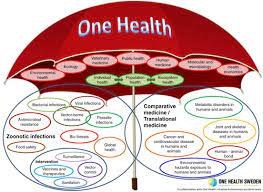
Agenda 21/Agenda 2030 was originally titled ‘Our Common Future’, the planning of societal change takes place decades before the public see any signs of the implementation, by this time it is being sold to them in the form of a benefit’.  The future we will all have in common. The planning of economic and societal transformation, this has taken decades now the public can see this for themselves, but sadly many people still put their heads in the sand, completely ignore it to the detriment of this generation and future generations to come. This is the blueprint to control all our basic needs to survive, water, plants, human, animals- wild and domestic under the concept of what is called a ‘One Health Approach’ which is already embedded in the International Rules Based Order.  (Control of the whole Ecosystem) This is a recipe for destruction in every country village, township, city, region worldwide. This is a massive public relations scam that’s happening worldwide for ‘No-one to be left behind, everyone, everywhere at every age’. Right now the International Rules Based Order is implementing a plan called ‘De-growth’. This is the New Normal, the Great Reset the transformation for the 21st Century and beyond for the so called common good of all. Restrictions, mandates, isolation, controlling mechanisms for the common good of all. The Great Reset must be the peoples Great Resist if we are to survive with all our dignity intact.

The Global Agenda for the 21st Century is an inventory and control plan of what energy you take in and what goes out, monitoring measuring cities, targeting humans, you are the carbon they want to restrict- control- deplete, as populations are moved into these ever increasing highly dense cities. Diluting traditions, cultures of individual nations by way of implementing mass migration from developing countries. The dangerous path to Globalized Citizenship. The restricting of mobility, being easily monitored and controlled. Violating private property rights, parental rights. The reducing of consumption, usage- degrowth. The takeover of the Sovereign Nation State. This is the mapping of the ‘End Game’, the implementation of unelected global actors, global dictatorship of totalitarian sociopaths all at citizens, peoples, populations expense worldwide. Remove Human Activity from the Rural Areas these are to be called ‘wild lands, they use “concern for extreme population projection’.

UNEP, UN Environmental Programme, UN Conference on Environment and Development (UNCED) is also known as the ‘Earth Summit’ held in Rio de Janeiro Brazil in June 1992. This was the largest summit ever, it focused on the global socioeconomic activities and how they were predicted to have an effect on the environment. Climate doomism being caused by human activity, this was a way that worldwide influential leaders could come together, policymakers, diplomats, CEO’s, Scientists and of course the global propaganda machine Government leaders and NGO’s, representatives of 176 States and territories. Several UN organizations and specialized agencies, 35 intergovernmental organization and 1500 plusnon-governmental organizations. This coincided with the World Environment Day the 5th June. Environmentalism  (Eco-socialism) was about to spread worldwide. A Global governance of Eco Socialism. The International environmental Treaty, the power and influence over international systems worldwide as a whole.. Political, Economical, Environmental  Global Governance. The Brundtland Report established the coined phrase  ‘Sustainable Development’. The plan at the time was transforming modern society, it cultural, economic, political and scientific components it was reported ‘ this is in order to tackle dramatic environmental destruction’. The World Commission on Environment and Development ‘Our Common Future (1987) is titled ‘A GLOBAL AGENDA FOR CHANGE’ (The Brundtland Report) .. chaired by Norwegian Prime Minister  Gro-Harlem Brundtland This included the role of the International economy, food security and monitoring, Sustainable Development Towards Common Action  Our Common Future, From One Earth to One World  (The UN World Commission on Environment and Development)

Sustainable Development Towards Common Action. The calling  for a common endeavor and for new norms of behavior at all levels and in the interests of all. The changes in attitudes, in social values, and in aspirations that the report urges will depend on vast campaigns of education, debate and public participation. To this end, we appeal to “citizens” groups, to non governmental organizations, to educational institutions, and to the scientific community. They have all played indispensable roles in the creation of public awareness and political change in the past. They will play a crucial part in putting the world onto sustainable development paths, in laying the groundwork for Our Common Future. The process that produced this unanimous report proven that it is possible to join forces, to identify common goals, and to agree on common action. Governments, individually and collectively, have the principal responsibility to do this. UNEP’s Earthwatch programme should be the centre of leadership in the UN system on risk assessment 95. However, given the politically sensitive nature of many of the most critical risks, there is also a need for an independent but complementary capacity to assess and report on critical global risks. A new international programme for cooperation among largely non-governmental organizations, scientific bodies, and industry groups should therefore be established for this purpose. 4.4 Making Informed Choices 96. Making the difficult choices involved in achieving sustainable development will depend on the widespread support and involvement of an informed public and of NGOs, the scientific community, and industry. Their rights, roles and participation in development planning, decision-making, and project implementation should be expanded. 4.5 Providing the Legal Means 97. National and international law is being rapidly outdistanced by the accelerating pace and expanding scale of impacts on the ecological basis of development

Jacinda Ardern and the Earth watch Program and her leadership of the International Socialist Youth. Just a segment of our so called ‘Our Common Future’ under the regime of a One World Stakeholder Governance of Eco Socialism. The art of looking for trouble and finding it everywhere, diagnosing it incorrectly applying the wrong remedies, battling ideologies instead of working alongside uncertainties of science, and XX and XY of biology that has been insanely replaced by the Wokeism of  120 or more gender ideologies and throw in a few cat and dog human ideological agenda too.  Progressive global geopolitics,  sharing of variants of pathogen, the global human laboratory of lab rats worldwide. Bio-Digital Convergence and digital control where all people worldwide have digital identities to create a global utopia. Our so called Common Future is governed by a Communist top down global regime.

https://doi.org/10.1080/09709274.2012.11906507

5987our-common-future.pdf (un.org)

...

How the United Nations is quietly being turned into a public-private partnership

A new agreement with the World Economic Forum gives multinational corporations influence over matters of global governance.

Harris Gleckman

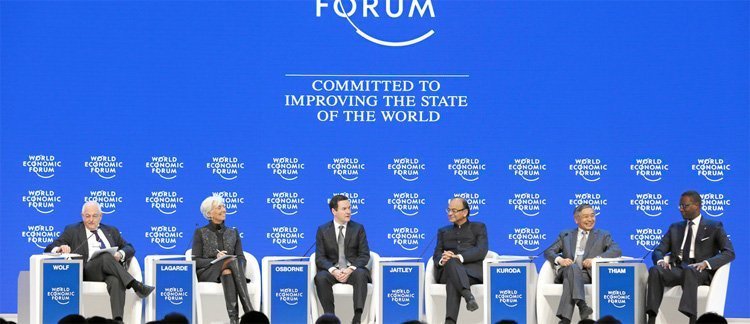
Anew corporate and government marriage quietly took place last week when the leadership of the World Economic Forum (WEF) and the United Nations (UN) signed a memorandum of understanding (MOU) to partner with each other. While this MOU is proudly displayed on the WEF website, it is nowhere to be found on the UN website. The only indication on the UN website of this important new development is a picture of the pen used to sign the agreement, and two pictures of the signing ceremony.

One reason for this difference is that the UN’s corporate-centered Global Compact has received a good deal of bad press. Now the new WEF-UN agreement creates a second special place for multinational corporations inside the UN. There is no similar institutional homes in the UN system for civil society, for academics, for religious leaders, or for youth. It is hard to imagine a national government signing a similar formal partnership with one of its business organizations.

At the same time, the UN is under pressure from Donald Trump who wants to deconstruct the whole multilateral system. For Trump, dismantling the international system built after World War II is a companion piece to his domestic effort at deconstructing the administrative state. For the Secretary-General of the UN, the pact with the WEF may well be his effort to find new power actors who can support the current system, which is now celebrating its 75th anniversary, in the face of Trump’s onslaught.

On the other side, the WEF recently received significant public criticism after giving Hungarian Prime Minister Orban and Brazilian President Bolsonaro a warm welcome at its 2019 Davos gathering. This marriage may be seen as a way for the WEF to re-establish itself as part of the global governance center.

The timing and managing of public perceptions are not the only interesting aspect of this arrangement. In 2009, the WEF published a 600 page report entitled the Global Redesign Initiative, which called for a new system of global governing, one in which the decisions of governments could be made secondary to multistakeholder led initiatives in which corporations would play a defining role. In a sense this WEF study recommended a sort of public-private United “Nations” – something that has now been formalized in this MOU. The agreement announces new multistakeholder partnerships to deliver public goods in the fields of education, women, financing, climate change, and health.

The rather detailed MOU includes forms of cross organizational engagement up and down the UN structure. The MOU contains commitments that the Secretary-General himself will be invited to deliver a keynote address at the WEF annual Davos gatherings. His senior staff and the heads of the UN programmes, funds, and agencies will also be invited to participate in regional level meetings hosted by the WEF. It also contains a promise that the UN’s individual country representatives will explore ways to work with WEF’s national Forum Hubs. Aware of the mutual importance of public legitimacy each institution can provide for the other, the MOU also contains an agreement to cross-publicize their joint activities.

Besides the institutional blessing of the United Nations, what does the WEF get from the MOU? The scope of each of the five fields for joint attention is narrowed down from the intergovernmentally negotiated and agreed set of goals to one with more in line with the business interests of WEF members. So under financing, the MOU calls only for ‘build[ing] a shared understanding of sustainable investing’ but not for reducing banking induced instabilities and tax avoidance.

Under climate change, it calls for ‘ …public commitments from the private sector to reach carbon neutrality by 2050’, not actions that result in carbon neutrality by 2030 . Under education, it re-defines the Sustainable Development education goal to ‘ensure inclusive and equitable quality education’ into one that focuses on education to meet the ‘rapidly changing world of work.’ The MOU explicitly restricts the WEF from making financial contributions to the UN, which might have ameliorated the economic impact of some of Trump’s threat to the budgets of the UN system. At the same time, it avoids any commitment to reduce global inequality, to make energy affordable, to hold multinational corporations accountable for human rights violations, or even to rein in the behavior of the WEF’s firms that act inconsistently to the re-defined goals set out in the agreement.

All this joint work might have some practical good if it were not for three crucial elements: firstly, the agreement circumvents the intergovernmental review process; secondly, the agreement elevates multistakeholderism as the solution to the problems with the current multilateral system; and thirdly the proposed multistakeholder partnerships are not governed by any formal democratic system. Were the Secretary-General convinced of the wisdom of a UN marriage with the WEF, he could have submitted the draft MOU for approval by the member states. Instead, the Secretary-General joined the WEF in declaring in effect that multistakeholder groups without any formal intergovernmental oversight are a better governance system than a one-country-one-vote system.

All multistakeholder governance groups are largely composed of a self-selected group of multinational corporations and those organizations and individuals that they want to work with. They work without any common internal rule book to protect the views of all who might be impacted by the group. Participation in multistakeholder group is a voluntary undertaking. The drop-in-drop-out arrangements are antithetical to the UN’s efforts for 75 years to build a stable secure global governance system with a clear understanding of obligations, responsibilities and liabilities.

What is surprising is that by accepting this marriage arrangement with the WEF, the Secretary-General of the UN is marginalizing the intergovernmental system in order to ‘save’ it.

Open Democracy 2nd July 2019

https://www.opendemocracy.net/en/oureconomy/how-united-nations-quietly-being-turned-public-private-partnership/?source=in-article-related-story

...

ECO Socialist Multistakeholder Public Private Global Partnership with the UN-WEF ‘Corporate Capture of the World’ and the Global Godfather of Climate Hysteria

Maurice Strong the Godfather of Climate Hysteria. The self proclaimed Socialist Climate Change Inventor, that defined a trace gas as a very wealthy meal ticket of tens of thousands of climate functionalities

Maurice Strong established two of the largest UN Environmental Agencies.  Maurice Strong Personal Advisor to  UN Secretary Generals. Maurice Strong quoted at the UN “We may get to the point where the only way of saving the world will be for industrialized civilization to collapse. Isn’t it our responsibility to bring this about”? Quote Maurice Strong UN. The Science is settled “No its not:. Maurice Strong Self confessed socialist had a massive influence on world affairs, international environmental rules, international agencies and businesses, an influential member of the WEF

Maurice Strong joined the UN at 18years old lived with a leader of the UN Treasury. Eventually put the UN into the collaboration with environmental businesses. The shadowy influence of the UN Leaders from 1962 till 2005, often clled ‘the international man of mystery’  and a ‘new guy in your future’ and a very dangerous one at that. Strong made his fortune in oil and energy eg Petro Canada, Power Corporation, CalTex Africa, Hydro Canada, the Colorado Land and Cattle Company, Ajax Petroleum, Canadian Industrial Oil and Gas— to name just a few. He had an extensive range of contacts within the power brokers of the world, he was called the ‘Michelangelo of Networking’ but he was not angel.

1972 organized the 1st Earth Summit in Stockholm The Conference on the Human Environment. This led to the formation of the UN Environment Program Maurice Strong was the head of this. Later he organized the UNEP, he was the boss of the first international expert group on climate change. This led to UN sponsored organizations eg The Earth Council and Earth Charter, World Resources Institute, World Wild Life Fund, The Commission for World Governance and the University for Peace.

Strong was the driving force behind the world governance, governing of UN Nation States . He dreamt up a world tax on monetary transactions of 0.05% which would have given the UN an annual income of $1.5 trillion annually. About equal to the income of the US. However the stumbling block was the UN Security Council that has veto rights. (The power of Veto). So he devised a plan to get rid of the UN Security Council but did not succeed in implementing his plan. And then he came up with this light bulb moment called ‘Global Warming’, this might just be the device to get his World Governance up and running.

1989 Strong was appointed to Secretary General of the Earth Summit, 1992 he addressed the second Earth Summit at Rio. Telling 1,000’s of climate change delegates

“It is clear that current lifestyles and consumption patterns of the affluent middle class— involving high meat intake, consumption of large amounts frozen and convenience foods, use of fossil fuels, appliances, home and work place air-conditioning, and suburban housing — are not sustainable”.

Hence there goes the house (private Property) there goes your Meat  (plant based burgers) Bill Gates ‘Beyond Burgers’, the transformation of the world called ‘The World we Want’ being the world the Corporation- UN-WEF Collaborators want.  (Global Power and wealth)

However Strong did not say at this time he had actually purchased a very large piece of land in Colorado. The Colorado Land and Cattle Company, he bought this off an arms dealer named Adnan Khashoggi who had strong connections with the Bin Laden family

200,000 acres of cattle property called ‘Baca’ It sat on a vast underground water system. Strong formed the American Water Development Corporation to exploit the water by pumping it out for commercial intent but was stopped by locals. Maurice Strong was told by a mystic that : The Baca Ranch would become the new planetary order which would evolve from the economic collapse and environmental catastrophes that would sweep the world in years to come”

With this, he created the Manitou Foundation, a New Age Institute which was located at his Baca Rach, above what he called the saced waters that lay below. He established the ‘Conservation Fund’ with the help of Laurence Rockefeller, to study the mystical properies of the Manitou Mountaun. A circular temple was built at the ranch devoted to the world mystical movements

The valley where the Baca Ranch is located is traditional home of the Navajo tribes. They believe that their ancestors were led underground in this valley by ‘Ant People’. According to the Navajo tradition they warned of the coming ‘Sky Katchinas’ (Sky spirits’. Strong was drawn towards these Navajo mystical beliefs. Maurice Strong founded the Earth Council Institute in 1992, recruiting world luminaries eg., Mikhail Gorbachev, Shimon Peres, Al Gore and David Rockefeller. In year 2000 Earth Charter Strong again pushed for a World Governance body.

2005 Maurice Strong, an extremely powerful man made a push which he announced would save humanity, the promoting of the theory of human induced greenhouse gases, but he was caught with his hand in the till. He endorsed a chque for himself made out to M Strong issued by the Jordanian Bank. The South Korean businessman Tongsun Park was given the cheque, he was convicted in 2006 by a New York Federal Court of conspiring to bribe  UN Officials

Maurice Strong resigned and then fled to Canada, then onto China where he continued to live. Taking sanctuary in China where his cousin Louise Strong, a Marxist who lived with Mao Tse Tung for 2 years before she died in 1970.

In 1947 Maurice Strong  worked at the UN at the age of 18 a Canadian from Manitoba, he was a junior officer at the UN Security Section, he lived with the UN Treasurer Noah Monod. Maurice Strong was involved in bribery and corruption, a very well known one was the Un Oil for Food Scandal. Strong was stripped of many of his 53 International Awards and honours he had collected over a lifetime for this. Strong was known for his dual role of an eco global socialist pushing for a world governance and he was also reported to be a ruthless businessman

Maurice Strong was a longtime Foundation Director of the World Economic Forum, a senior advisor to the World Bank. A Canadian Oil- Mineral Businessman, Under Secretary of the UN, President of the Power Corporation of Canada, Secretary of the Un Human Environment Programme, CEO of Petro Canada, Headed Ontario Hydro. Head of the Water Development Incorporated, Commissioner of the World Commission on environmental Developments, Leader of International environmental Movements worldwide.

An active member of Perking University, Chairman of the Advisory Board for the Institute for Research on Security and Sustainability for North East Asia. Died at 86 in 2015. Self confessed radical Socialist. There are references made to Maurice Strong and Canada’s Principal Investment Corporations that have interests in Energy and Utility Businesses. The Power Corporation of Canada. In 1976 at Pierre Trudeau request Maurice Strong returned to Canada to head the newly created national oil company Petro-Canada.

Strong was a shareholder in Oil companies, he had acquired Denver Oil was the largest shareholder. AZL merged with Tosco Corporation which Strong acquired which was 160,000 acres – the Baca Ranch in Colorado which was Strongs Manitou Foundation. Strong later became the chairman of the Canada Development Investment Corporation, the holding company for some of Canada’s principal government owned corporations. 1982 he became chair of Ontario Hydro.

Dec 3st 1986 Strong founded the American Water Development Incorporated, with a rights to pump water from a guge area and sell it to water districts in the Front Range Urban Corridor of Colorado. (There was much conflict about this and activism) So Strong existed the company. Strong was the director of Molten Metal Technology, an environmental tech company founded in 1989, recycling hazardous waste gained research grants from US Dept of Energy. The company later filed for bankruptcy.’ Stockholm Conference

In 1971, Strong commissioned a report on the state of the planet, Only One Earth: The Care and Maintenance of a Small Planet,[25] co-authored by Barbara Ward and Rene Dubos. The report summarized the findings of 152 leading experts from 58 countries in preparation for the first UN meeting on the environment, held in Stockholm in 1972. This was the world’s first “state of the environment” report.

The Stockholm Conference established the environment as part of an international development agenda. It led to the establishment by the UN General Assembly in December 1972 of the United Nations Environment Programme (UNEP), with headquarters in NairobiKenya, and the election of Strong to head it. UNEP was the first UN agency to be headquartered in the third world.[26] As head of UNEP, Strong convened the first international expert group meeting on climate change.[27]

Strong was one of the commissioners of the World Commission on Environment and Development, set up as an independent body by the United Nations in 1983.

Maurice Strong the Godfather of Climate Hysteria. A longtime foundation Director of the WEF, on the advisory committee of Harvard University, the World Business Council for Sustainable Development. Maurice Strong flanked by 100 world leaders embodied in Agenda 21 launchpad. The design of the global governance and Mass Global Warming hysteria that has now evolved into a ECO Socialist Multistakeholder Public Private Global Partnership with the UN-WEF ‘Corporate Capture of the World. WEF GLOBAL REDESIGN INIATIVE. THE GREAT RESETTHE NEW NORMAL – THE GLOBAL AGENDA 2030- TO LEAVE NO-ONE BEHINDEVERYONE EVERYWHERE AT EVERY AGEORIGINATED BY THE SHADOW OF THE MOST POWERFUL LEADERS OF THE UNNONE OTHER THAN MAURICE STRONG.THE GLOBAL GOD FATHER OF CLIMATE HYSTERIA.

https://en.wikipedia.org/wiki/Maurice_Strong

 https://coherence.com.au/curlew/2019/08/maurice-strong-inventor-of-global-warming/


...